

 English
Same Gram Weight, Different Wall Thickness: What Buyers Miss About PET Preforms
Content
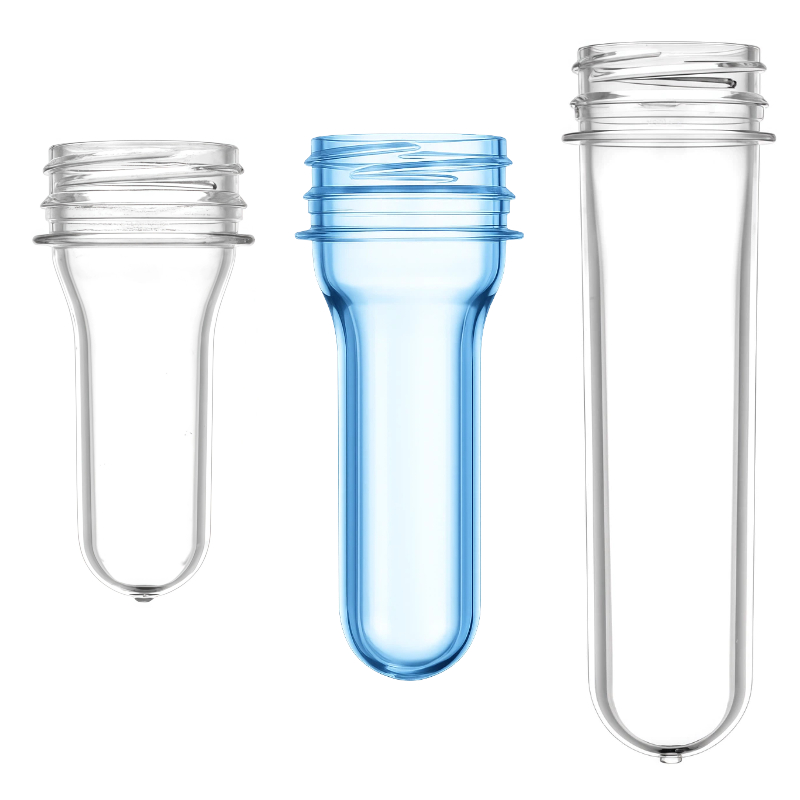
Two preforms. Same gram weight. Same neck finish. Same stated dimensions on the spec sheet. But one produces consistent, high-clarity bottles at 98% line efficiency — and the other causes wall whitening, uneven stretch, and a rejection rate that quietly eats into your margins.
This happens more often than most buyers realize. And the reason is almost never the gram weight.
Why Gram Weight Alone Tells You Very Little
Gram weight measures one thing: how much PET resin went into the preform. It tells you about material cost per unit. It does not tell you how that material is distributed across the preform body — and distribution is what actually determines bottle performance.
Think of it this way: a 28-gram preform with walls that are 0.4mm thicker on one side than the other weighs exactly the same as a perfectly centered one. On a scale, they're identical. On a blow molding line running at 20,000 bottles per hour, they behave very differently.
The variables that matter most — mold precision, resin IV value, and material flow consistency — rarely appear on a standard quotation. Buyers who evaluate preforms by gram weight alone are, in effect, pricing a product they haven't fully specified.
The Hidden Variable: How Mold Precision Determines Wall Distribution
Every PET preform is shaped by two components working in tight coordination: the outer cavity and the inner core pin. The core pin defines the interior geometry of the preform. If it drifts even slightly off-center during injection — by as little as 0.05mm — the result is a preform with uneven wall thickness from top to bottom.
That eccentricity is invisible to the naked eye. The preform looks normal. It weighs correctly. But when it enters the stretch blow molding stage, thinner areas stretch faster and farther than thicker ones, creating uneven material distribution in the finished bottle. In mild cases, this shows up as visual haze or soft spots. In worse cases, it causes blowouts during filling.
High-quality mold design addresses this through precision CNC-machined cores, balanced multi-cavity hot runner systems, and optimized cooling channels that maintain consistent temperature across every cavity. A mold producing 48 cavities simultaneously must deliver the same wall geometry from cavity 1 to cavity 48 — any variation compounds at production scale. Learn more about how wall thickness and neck geometry affect blow molding performance in downstream production.
When evaluating a supplier, asking about mold cavity count is less useful than asking about their core alignment tolerance and how they validate wall uniformity across cavities. The answer — or the absence of one — is telling.
Resin IV Value: The Spec Buyers Rarely Ask For
Intrinsic Viscosity (IV) measures the molecular chain length of PET resin, expressed in dL/g. It directly affects how the material flows during injection and how it stretches during blow molding. Most buyers never ask for it. Most suppliers don't volunteer it.
For standard beverage bottles, preform-grade PET typically falls between 0.72 and 0.85 dL/g. The specific target matters:
- IV 0.72–0.78 dL/g — suitable for still water and standard beverage bottles; lower melt viscosity, easier flow, good clarity
- IV 0.78–0.85 dL/g — required for carbonated drinks; higher molecular weight supports internal pressure resistance and more uniform wall stretch
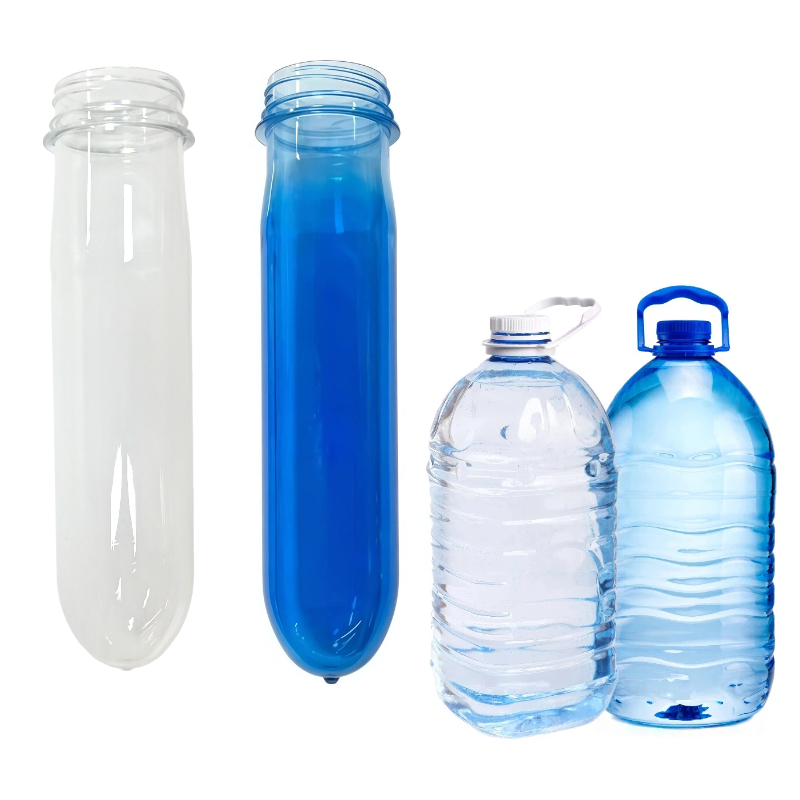
- IV ≥0.85 dL/g — used for large-format containers (5-gallon, edible oil) where structural integrity under load is critical
A preform made from resin with an IV value below the application requirement will need thicker walls to compensate for reduced stretch strength — meaning more resin per unit to achieve the same bottle performance. Conversely, using the right IV grade allows thinner, more uniform walls that stretch consistently across the mold cavity. Understanding how resin grades affect preform clarity, strength, and recyclability is a practical step toward better sourcing decisions.
The practical implication: two suppliers quoting a "28g, 28mm PCO 1881 preform" may be using resins at opposite ends of the IV range. The bottles they produce will not perform the same.
What Uneven Wall Thickness Actually Costs You
The cost of poor wall distribution doesn't show up on the preform invoice. It shows up downstream — and it accumulates fast.
On the blow molding line, eccentricity in the preform causes inconsistent heating during the reheat phase, since thicker sections retain more heat than thinner ones. The stretch rod encounters uneven resistance. The result is bottles that don't fully conform to the mold cavity, with base stress concentrations and sidewall thickness that varies by 15–30% from one side to the other.
For carbonated beverages, that variation directly compromises pressure resistance. A bottle designed to hold 4–5 bar of CO₂ pressure becomes unpredictable when its sidewall geometry is inconsistent. For hot-fill applications, uneven walls increase the risk of vacuum deformation after cooling.
Then there's the line efficiency issue. Preforms with inconsistent wall geometry require more frequent blow mold adjustments, higher scrap rates during startup, and more operator intervention to maintain output quality. A 2% increase in rejection rate on a line running 20,000 bottles per hour means 400 rejected bottles every hour — before factoring in the beverage, label, and labor costs already invested. For a practical look at how these failure modes present on the production floor, see our guide to common PET preform defects and how to fix them.
What to Ask Your Preform Supplier Before Placing an Order
Gram weight and neck finish should be the starting point of a specification conversation, not the end of it. Three additional parameters are worth requesting explicitly:
- Wall thickness tolerance report — ask for cross-sectional wall measurement data from multiple cavities. A supplier with robust quality control will have this. Acceptable eccentricity is typically within ±0.15mm on the body wall.
- Resin IV value and supplier — the IV grade should match your end application. For carbonated beverages, confirm the resin meets 0.78–0.85 dL/g. Ask for the resin certificate if in doubt.
- Blow test samples before bulk order — run a small sample batch on your own blow molding line under standard parameters. Wall distribution problems that pass visual inspection will surface immediately during stretch blow molding.
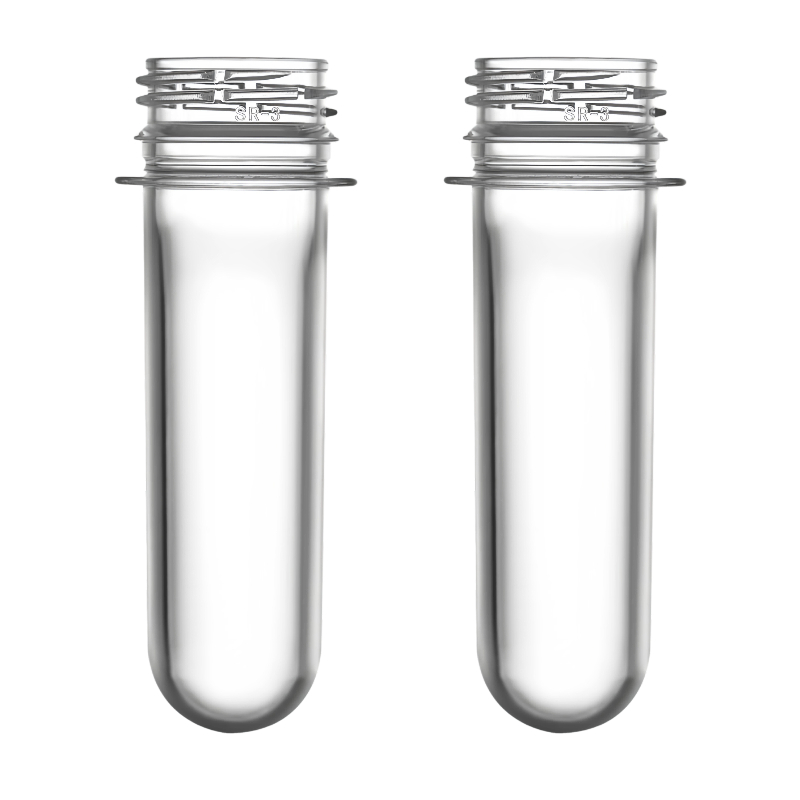
For buyers sourcing 28mm PCO 1881/1810 preforms for standard beverage applications or 38mm wide-mouth preforms for juice and dairy packaging, these three data points — wall tolerance, IV value, and blow test results — give a far more reliable picture of production compatibility than gram weight alone.
The preform is the most upstream decision in your bottle supply chain. Getting it right means fewer adjustments, lower scrap, and a production line that runs the way it's supposed to.