

 English
The Race to Reduce: How the Beverage Industry Is Pushing PET Preform Lightweighting
Content
Between 2000 and 2014, the average weight of a 500ml single-serve PET water bottle dropped by 52% — from roughly 19 grams to 9.25 grams. That's not a rounding error. It's the result of sustained, industry-wide pressure to take grams out of every preform without losing the structural performance that keeps bottles intact from filling line to retail shelf.
The drive hasn't stopped. And for beverage producers, bottlers, and preform buyers, understanding what's behind it — and where the real limits are — matters more than it used to.
Why Every Gram Removed Multiplies Fast
PET resin is the single largest cost variable in preform manufacturing. A 5% reduction in preform weight returns a roughly 4.4% saving on cost per unit — compared to just 0.26% from an equivalent 5% reduction in equipment costs. At scale, the math is compelling.
For a bottling operation running 20,000 bottles per hour, shaving 1 gram off the preform spec translates to approximately 20 kg less resin per hour, or around 160 tonnes per year on a single line. Multiply that across multiple lines and global operations, and lightweighting becomes less of an engineering project and more of a competitive necessity.
Transportation economics reinforce the same logic. Lighter preforms mean lower freight cost per pallet and a reduced carbon footprint per bottle shipped — increasingly relevant as brands face tightening sustainability reporting requirements and consumer scrutiny.
Three Forces Driving the Push Right Now
Lightweighting in PET packaging isn't new, but the forces behind it have intensified since 2020.
Regulatory pressure on recycled content. The EU Single-Use Plastics Directive and state-level legislation in the US are pushing brands toward higher rPET content and lower overall plastic use. Lightweighting and rPET adoption have become linked priorities: reducing the total resin volume per bottle makes hitting recycled-content targets both cheaper and more technically manageable. Recycled PET content is now incorporated in approximately 30% of newly launched preforms globally, with that figure rising as compliance deadlines approach.
Raw material price volatility. A 5.3% year-on-year increase in purified terephthalic acid (PTA) prices in 2025 — one of PET's primary feedstocks — compressed margins across the supply chain. When resin prices spike, every gram that can be safely removed from a preform spec becomes a direct hedge against input cost volatility.
Sustainability commitments from major brands. Nearly 45% of beverage brands have pledged to use recycled PET in their packaging, and many have paired those commitments with explicit targets to reduce total plastic use per SKU. Lightweighted preforms are the most direct lever available to bottlers and brand owners operating within existing filling infrastructure.
What Enables Lightweighting: The Technical Side
Taking grams out of a preform without compromising bottle performance requires more than a thinner wall spec. Three factors determine whether a lightweighted preform actually works on the production line.
Resin IV value and molecular orientation. Higher intrinsic viscosity resin (typically 0.78–0.85 dL/g for carbonated beverages) allows thinner preform walls because the longer molecular chains maintain tensile strength after biaxial stretching. Lower IV grades require compensating with more material to achieve equivalent pressure resistance. Lightweighting without adjusting the resin spec can result in bottles that pass static testing but fail under dynamic filling or drop conditions.
Mold precision and cooling efficiency. Thinner preform walls amplify the consequences of any mold eccentricity. A 0.05mm core misalignment that produces acceptable results in a standard-weight preform may cause consistent wall failures in a lightweighted version of the same design. Well-configured injection molding equipment can produce preforms with wall thickness tolerances as tight as ±0.05mm — but achieving that requires investment in high-precision tooling and rigorous cavity-level quality monitoring. Explore how wall thickness geometry shapes blow molding performance in downstream bottle production.
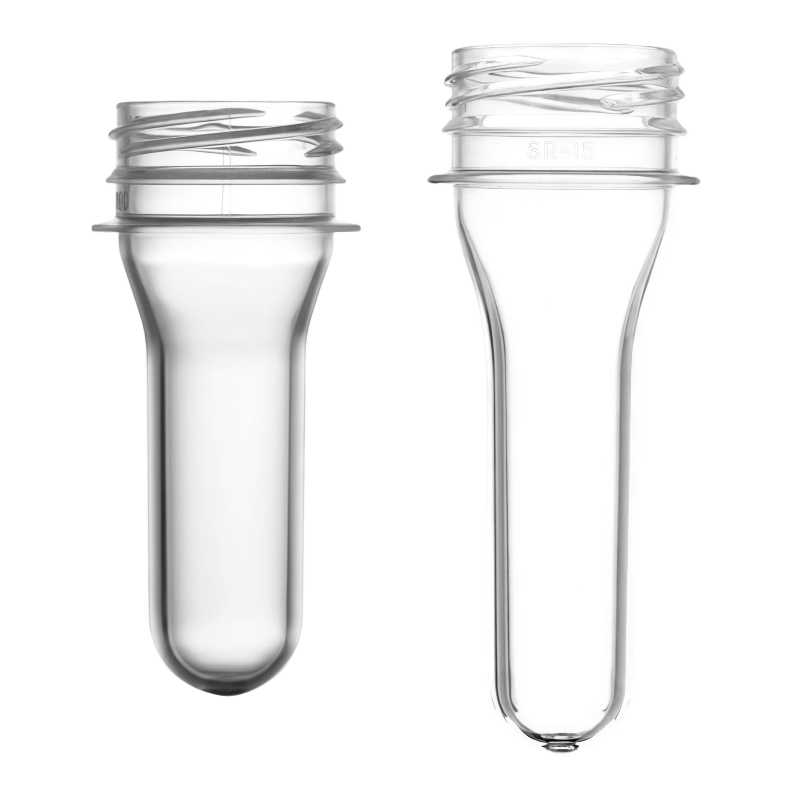
Preform geometry redesign. Simply reducing wall thickness uniformly is rarely optimal. Advanced lightweighting uses CAE (computer-aided engineering) simulation to model material flow and stress distribution during stretch blow molding, then redistributes material from low-stress zones toward areas that carry structural load — the base gate area, the shoulder, and the sidewall beneath the neck finish. The result is a preform that weighs less but distributes what material remains more effectively.
Where the Limits Are
Lightweighting is not a straight line toward zero. Each application category has a practical floor below which further reduction compromises performance in ways that can't be engineered around.
For still water in 500ml format, the industry has reached preform weights below 10 grams in leading designs. Carbonated soft drinks require meaningfully more material — typically 25–30% heavier preforms than equivalent still water bottles — because the internal CO₂ pressure (4–5 bar) imposes structural demands that can't be met with the same lightweight geometry. Hot-fill juice and tea applications add thermal stability requirements that again push weight back up.
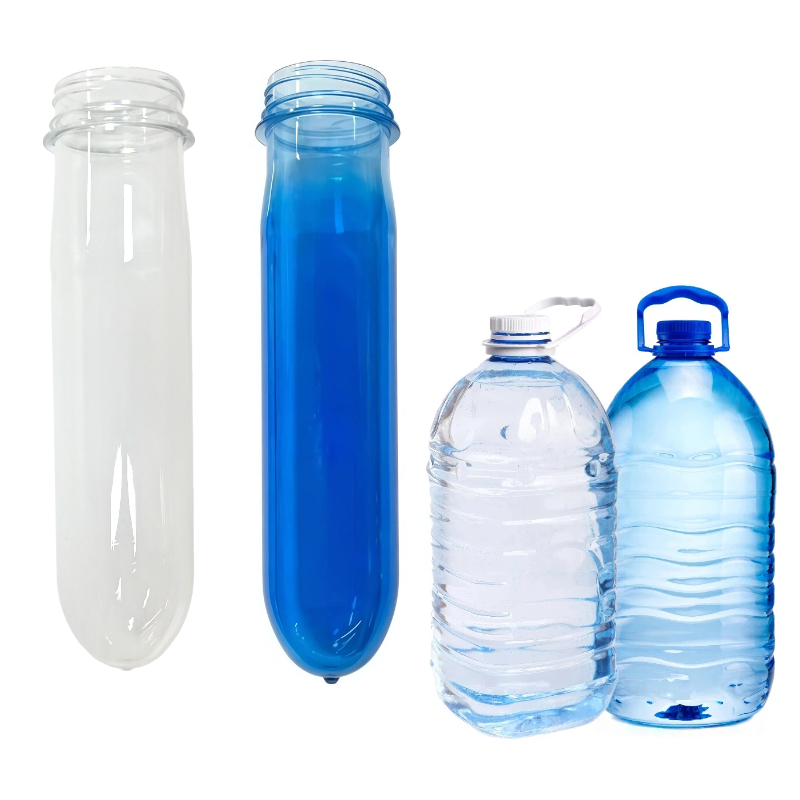
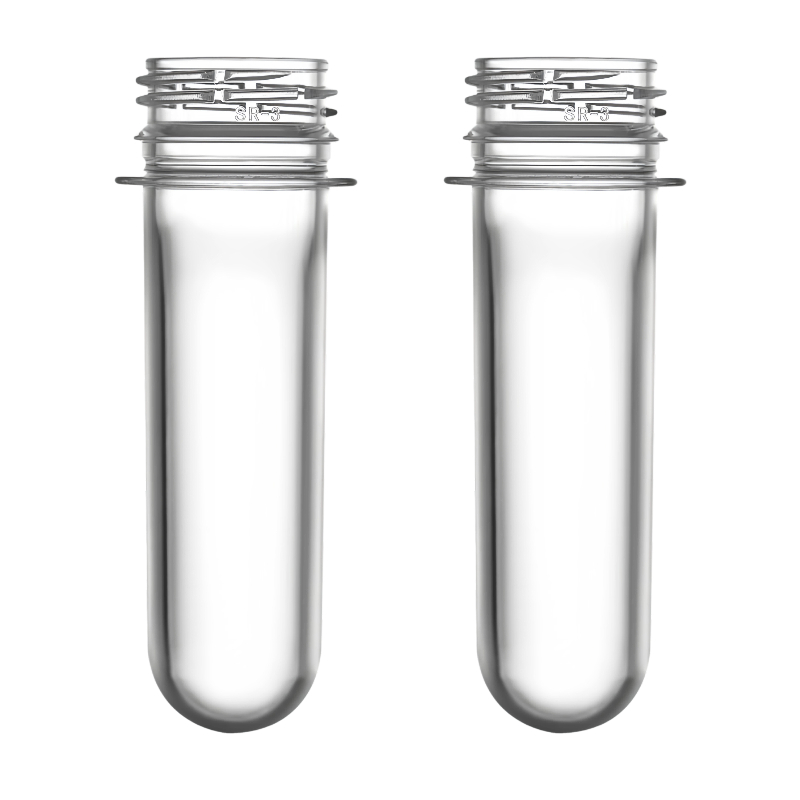
Large-format containers face different physics entirely. A 5-gallon (19L) jug requires a 45mm or larger neck finish and a preform body thick enough to survive the stretch ratios involved in blowing to that volume. Wide-mouth preforms for large-volume applications are designed around those structural constraints — lightweighting here means optimizing geometry, not simply reducing mass.
Understanding how resin grade selection interacts with lightweighted preform designs is essential before changing a spec — the two variables can't be treated independently.
What This Means for Buyers
For procurement teams sourcing preforms, the lightweighting trend has two practical implications.
First, a lighter preform is not automatically a better preform — or a worse one. The question is whether the reduced gram weight has been achieved through disciplined geometry redesign and matched resin selection, or simply by thinning walls across the board. The former works. The latter tends to produce yield problems that show up at the blow molding stage, not in incoming quality inspection.
Second, supplier capability matters more as gram weights decrease. Shot weight variation across cavities should be below ±0.3g to ensure uniform downstream blow molding performance — a tolerance that's achievable with modern equipment but demands consistent process control. When evaluating a lightweighted preform spec, ask for cavity-level weight data and wall thickness reports, not just average values. See our guide on common preform defects and how to identify them before they affect your line.
The beverage industry's push to reduce preform weight has produced real results — billions of kilograms of resin saved, lower per-bottle cost, and measurable environmental gains. The technical foundation that makes it possible is precision manufacturing. Without it, a lighter spec is simply a thinner margin for error.