

 English
28mm vs 30mm vs 38mm Preform Neck: Which One Do You Need?
Content
Three millimeters can make or break a production line. Specify the wrong preform neck finish, and you're looking at misfitting caps, pressure failures, or a pouring experience that drives consumers away. The 28mm, 30mm, and 38mm neck sizes cover the vast majority of PET bottle applications on the market today—yet each was engineered with a specific product category in mind.
This guide breaks down exactly what separates these three neck finishes, which products each one is built for, and how to make the right call before you place a bulk order.
What the Neck Finish Actually Does
The neck finish—sometimes called the neck ring or bottle mouth—is the only part of a PET preform that does not change during blow molding. While the body of the preform stretches into the final bottle shape under heat and pressure, the neck stays exactly as molded. That means every dimension of the neck finish, its diameter, thread profile, support ring, and sealing surface, is locked in from the preform stage.
Four things depend entirely on getting the neck finish right. First, cap compatibility: the thread pitch, start count, and diameter must match the closure precisely. Second, sealing performance: carbonated products require tight thread engagement to contain pressure; non-carbonated and viscous products have different sealing priorities. Third, filling line compatibility: automated lines grip and convey bottles by their support ring, so neck geometry must conform to equipment specs. Fourth, end-user experience: the opening diameter affects how consumers drink from or pour out of the bottle.
With that framework in mind, here is how the three dominant sizes compare.
28mm Preform Neck: The Beverage Industry Workhorse
The 28mm neck finish is the global standard for high-speed carbonated beverage bottling. Its dominance is not accidental—it was codified by the International Society of Beverage Technologists (ISBT), which defined the PCO (Plastic Closure Only) thread series that the entire industry now builds around.
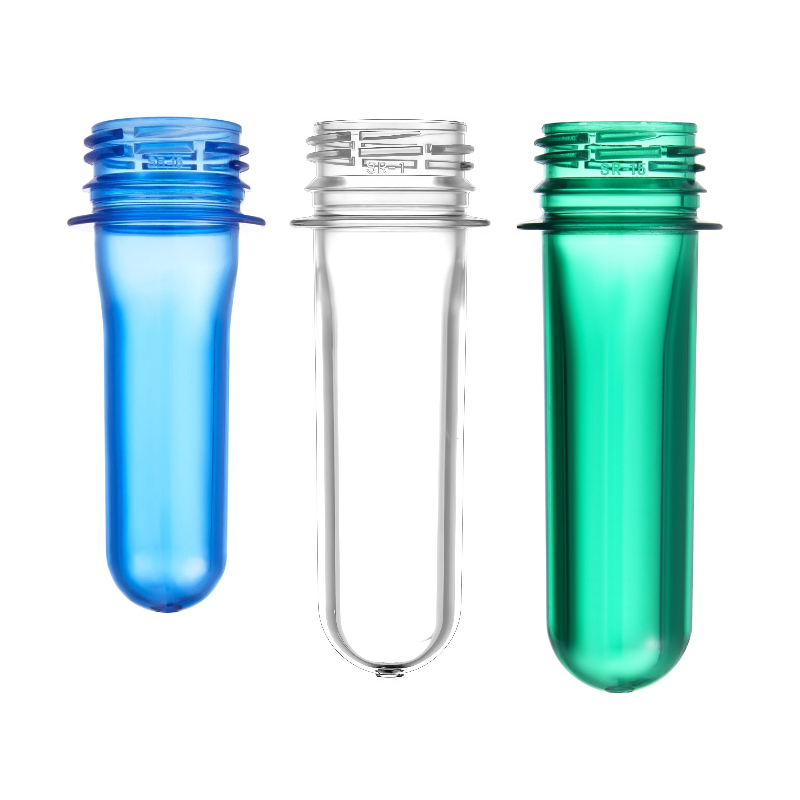
Two variants account for most 28mm usage today. PCO 1810 is the older profile, designed for standard 500–600ml CSD bottles, with a taller neck height and heavier support ring. PCO 1881 is the lighter, shorter-neck successor engineered to reduce resin consumption while maintaining equivalent pressure resistance—it has become the preferred choice for high-volume water and tea bottles in the 500ml–1L range. For a detailed breakdown of the two profiles and which cap types each one accepts, see our guide on differences between PCO 1881 and PCO 1810 neck finishes.
One design feature worth noting: the 28mm PCO neck includes a small notch groove just below the thread. During high-speed filling lines, liquid inevitably splashes onto the bottle mouth. The groove channels rinse water efficiently across the sealing surface, preventing residual liquid from accumulating and breeding bacteria—a hygiene detail that matters in dairy, juice, and pharmaceutical applications as much as in water.
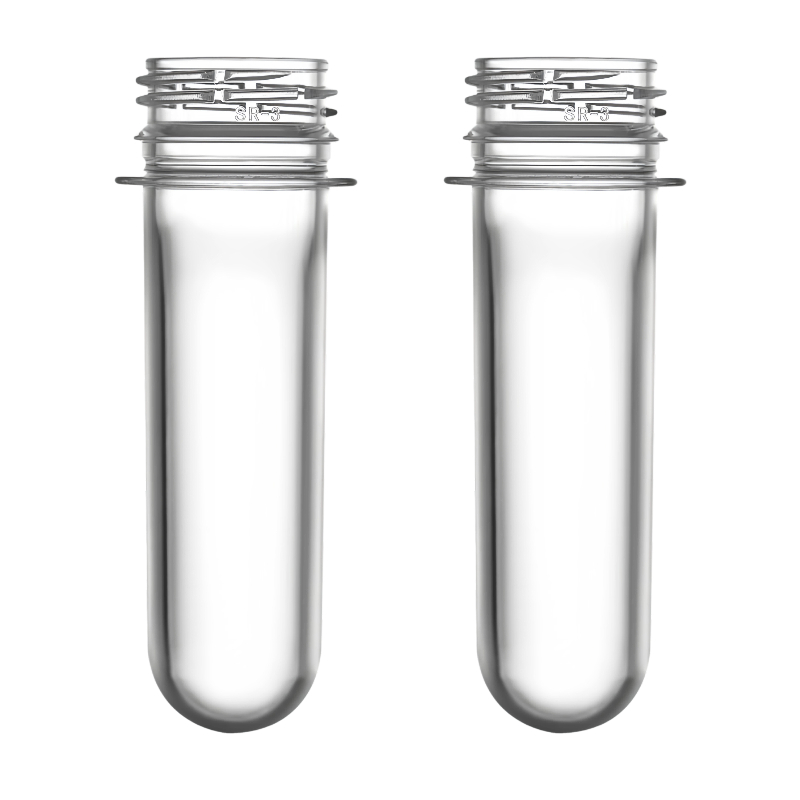
Typical preform weights for the 28mm neck run from 13.5g to 51g, supporting finished bottle volumes from 250ml up to around 2L. Our 28mm PCO 1881 and PCO 1810 preform specifications cover the full weight range available.
Best fit for:
- Carbonated soft drinks and sparkling water (all volumes)
- Still mineral water in 330ml–1L formats
- Beer, cider, and other pressurized beverages
- Pharmaceutical liquids and chemical packaging requiring tight tamper evidence
30mm Preform Neck: The Mineral Water Standard
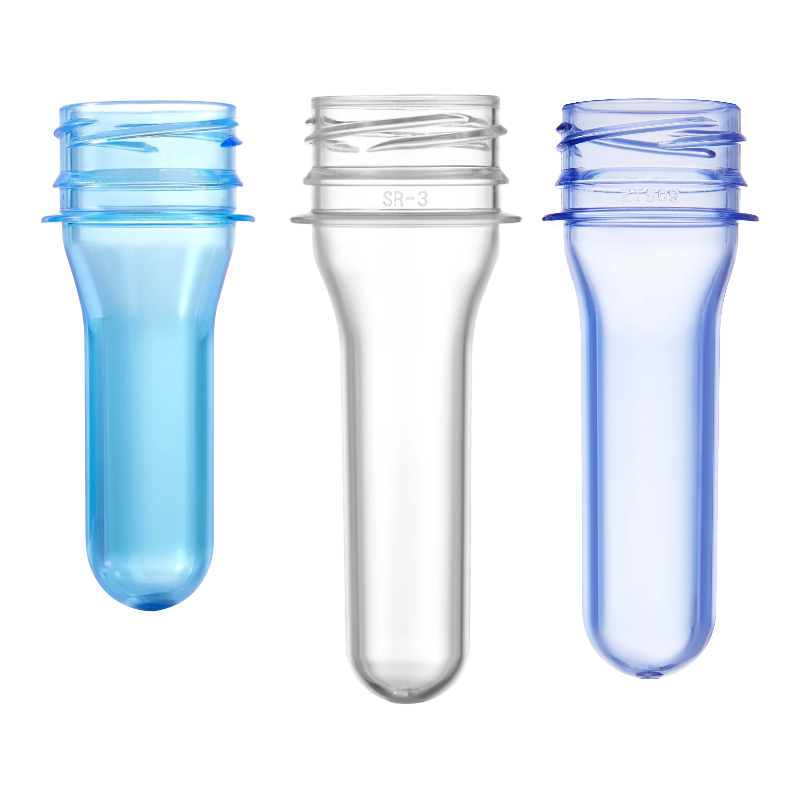
Ask a water bottler in Asia, the Middle East, or Eastern Europe what neck finish they use, and the answer is almost always 30/25—the designation for a 30mm outer diameter with a 25mm thread height. This format has become the de facto standard for still mineral water packaging, and for a straightforward reason: the opening diameter aligns naturally with the human mouth, making direct drinking comfortable without the slight narrowness of the 28mm PCO profile.
The 30/25 thread design creates a tight, reliable seal through a simple three-start thread pattern. There are no pressure-containment demands for still water, so the thread geometry can prioritize ease of capping and consistent torque over burst resistance. The result is a neck finish that performs reliably at high throughput while requiring less precision in the closure application process compared to CSD-grade necks.
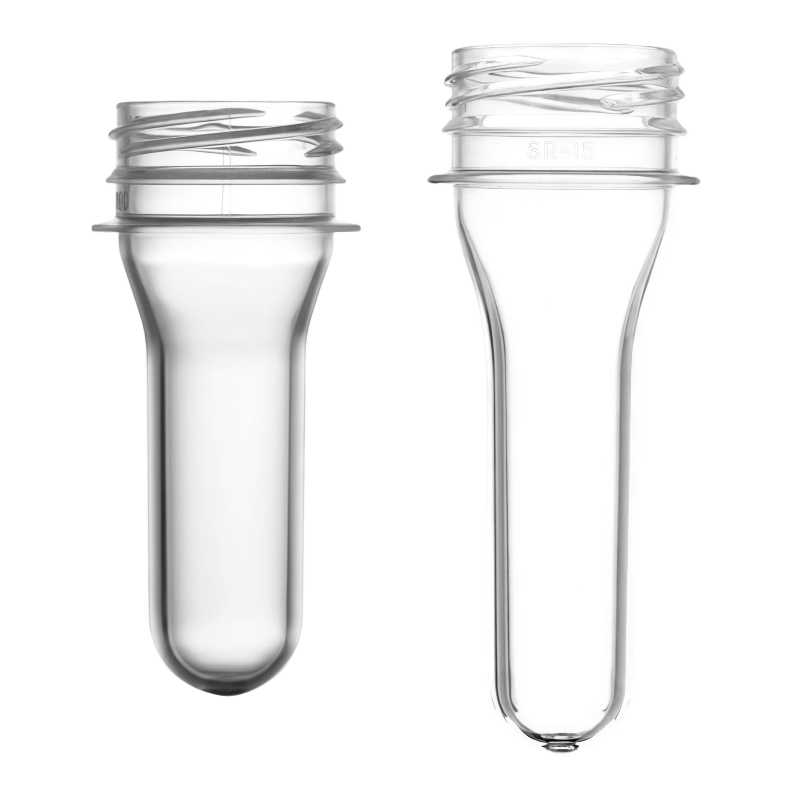
From a cost perspective, the 30mm neck offers an advantage over the 28mm PCO series for non-carbonated applications. The simpler thread profile means lower tooling complexity, and the neck's dimensional requirements carry less manufacturing variance risk. Preform weights for the 30/25 format range from 13g to 38g, covering still water bottle volumes from 250ml to 3L. Full product details are available on our 30mm mineral water bottle preforms page.
One important caution: the 30/25 neck is not designed for carbonated products. Its thread profile and sealing geometry are optimized for still liquids. Using it for CSD applications risks cap ejection under internal pressure—a failure mode that does not show up in lab tests but surfaces in warm distribution environments.
Best fit for:
- Mineral water and still drinking water (the primary use case globally)
- Non-carbonated flavored beverages and ready-to-drink teas
- Edible oils in smaller formats where the Alaska-style cap is acceptable
- Budget-sensitive still beverage projects where PCO tooling costs are not justified
38mm Preform Neck: Wide-Mouth Versatility
The 38mm neck finish occupies a different product space entirely. At 38mm, the opening is wide enough to pour thicker liquids without clogging, accommodate pulp or particulates in juice products, and provide the larger sealing surface that hot-fill applications require. This is not a drinking-direct neck finish—it is designed for products that are poured, scooped, or consumed with a wide flow.
The ergonomic case for 38mm is also real. The wider mouth conforms comfortably to the contours of the human lip when drinking from sports and functional beverage bottles, reducing the pressure and discomfort that a narrower neck creates during high-volume consumption. For sports drinks, protein shakes, and functional water products marketed around active use, this is a meaningful product differentiation point.
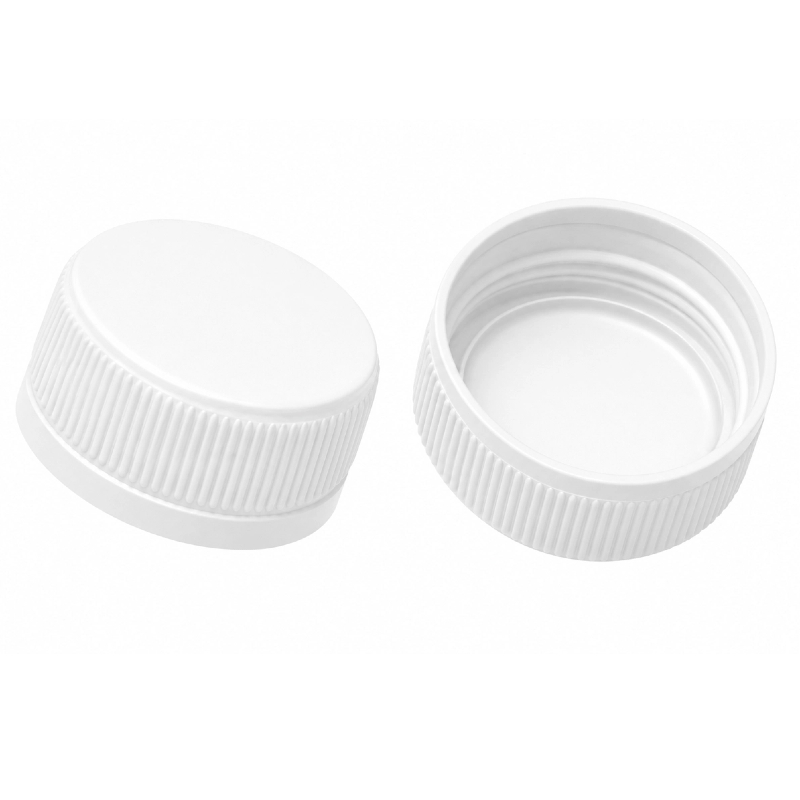
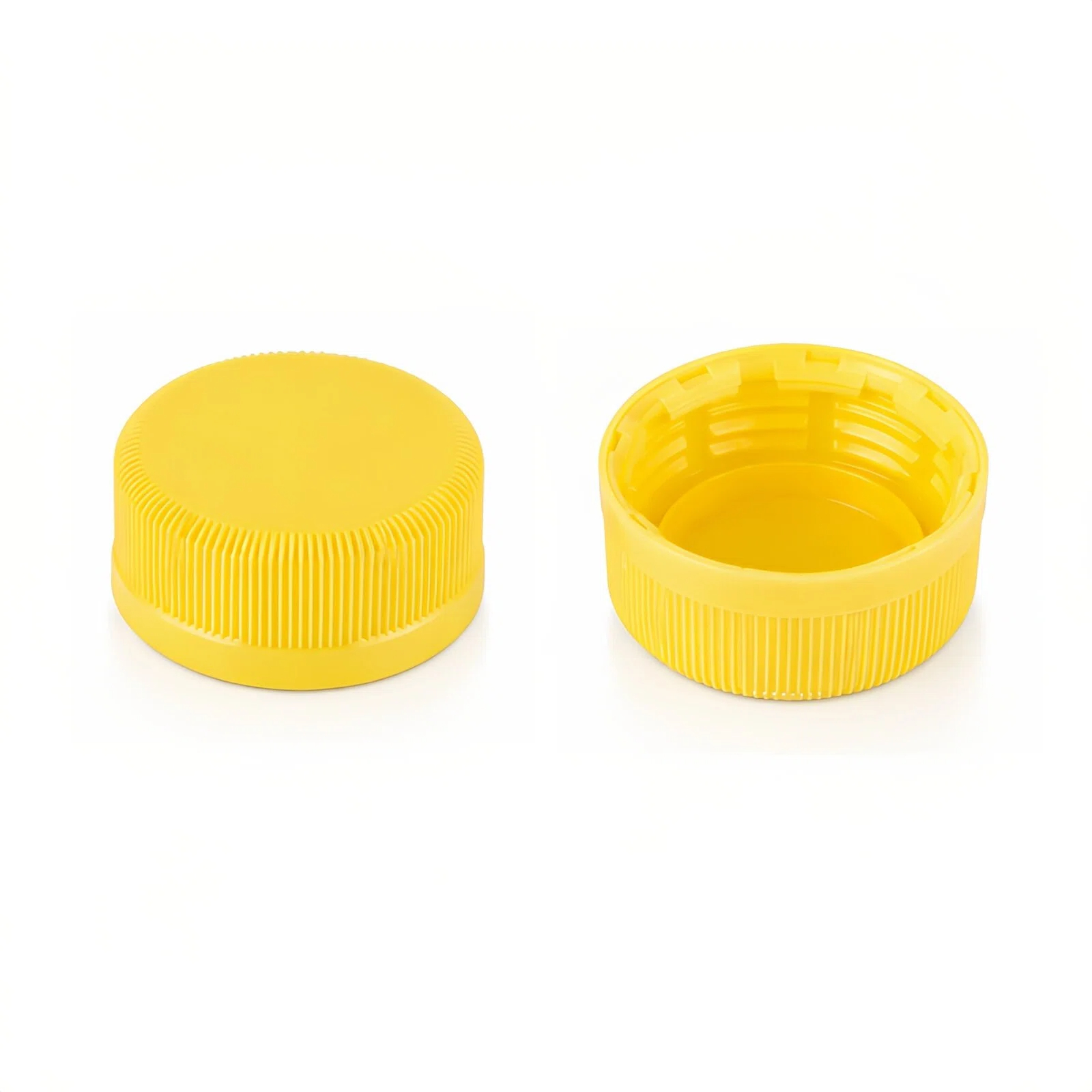
Two neck profile variants dominate in this diameter range. 38mm DBJ is widely specified for juice and dairy products and supports tamper-evident closure systems. 38mm SP400 is a multi-purpose profile compatible with standard screw caps, used across beverages, food products, and household liquids. For a full breakdown of how these closures work and which liner materials suit which products, the detailed cap compatibility options for 38mm preforms resource is worth reviewing before finalizing your spec.
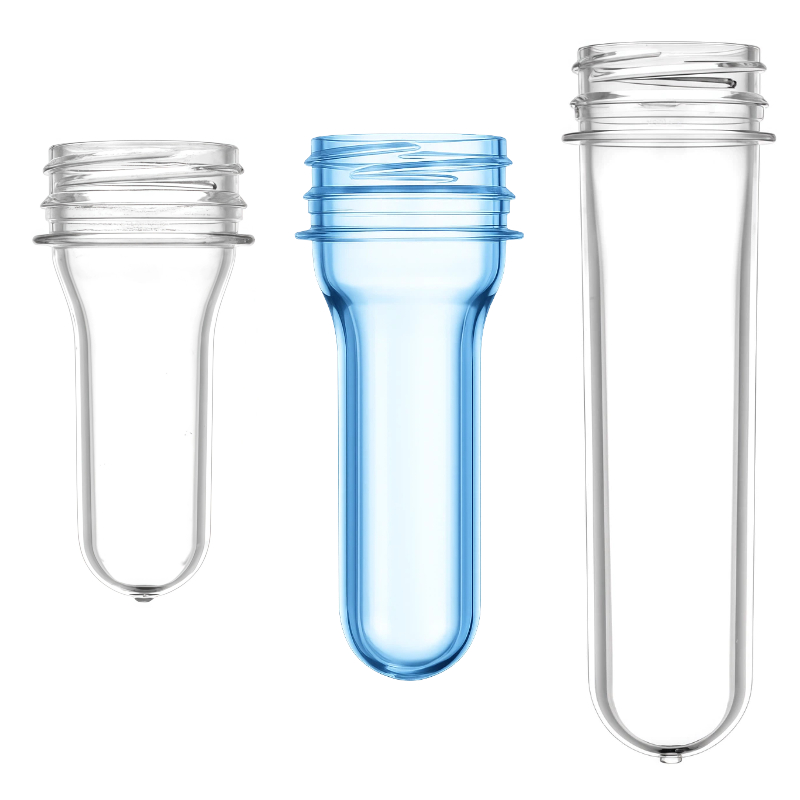
Preform weights for 38mm necks run from 24g to 58g, supporting bottle volumes from 250ml to 2500ml. Full specifications are on our 38mm wide-mouth PET preforms page.
Best fit for:
- Fruit juice with pulp and smoothies (wide pour, no clogging)
- Flavored milk, yogurt drinks, and dairy-based beverages
- Sports drinks and functional beverages consumed directly in high volumes
- Cooking oils, sauces, and condiments in mid-range bottle formats
- Hot-fill products requiring a larger sealing surface and thermal tolerance
Side-by-Side Comparison: Key Differences at a Glance
| Attribute | 28mm (PCO 1810 / 1881) | 30mm (30/25) | 38mm (DBJ / SP400) |
|---|---|---|---|
| Outer Neck Diameter | 28mm | 30mm | 38mm |
| Thread Standard | PCO 1810 / PCO 1881 (ISBT) | 30/25 three-start thread | DBJ / SP400 multi-start |
| Typical Preform Weight | 13.5g – 51g | 13g – 38g | 24g – 58g |
| Bottle Volume Range | 250ml – 2000ml+ | 250ml – 3000ml | 250ml – 2500ml |
| Pressure Resistance | High (CSD-rated) | Standard (still only) | Standard to moderate |
| Primary Application | CSD, sparkling water, beer | Mineral water, still beverages | Juice, dairy, oils, hot-fill |
| Cap Type | 28mm PCO screw caps | 30mm three-start screw caps | 38mm DBJ / SP400 screw caps |
| Typical Drinking Experience | Direct drinking, controlled flow | Direct drinking, natural fit | Wide-mouth pour or direct drink |
How to Choose: A Decision Framework
The right neck finish follows directly from three questions: what is in the bottle, how is it filled, and how will the consumer use it.
Start with the product. Carbonated beverages—regardless of volume—require a 28mm PCO neck. The thread geometry and burst-pressure rating on the 30/25 and 38mm formats are not rated for internal CO₂ pressure, and substituting them is one of the most common and costly mistakes in preform specification. Still water and non-pressurized drinks can comfortably use either the 30/25 or 28mm PCO format; the choice then comes down to cost, regional cap availability, and consumer preference. Products with pulp, particulates, or high viscosity almost always call for 38mm to avoid clogging and to ensure consistent fill volume on automated lines.
Then consider the filling process. Hot-fill applications—juices, teas, sauces filled above 85°C—place thermal stress on the neck finish during filling and cooling. The larger sealing surface of the 38mm format is better suited to absorbing that thermal variation without deforming the thread engagement zone. Aseptic cold-fill lines generally work well with all three sizes, but equipment tooling for each neck type is not interchangeable, so confirm line compatibility before switching formats.
Finally, check cap availability in your target market. The 28mm PCO 1881 cap is produced in virtually every major packaging market globally. The 30/25 cap is dominant in mineral water markets but less standardized in some regions. The 38mm format, while widely available, has more regional variation in closure profiles. Sourcing your caps from the same supplier as your preforms is the most reliable way to guarantee thread engagement consistency at scale.
For a broader look at all the variables that go into preform selection—including wall thickness, resin grade, and coloring options—our resource on how to select the right preform for your product covers the full decision process.
If your product sits at the boundary—say, a functional water with light carbonation, or a dairy-based drink with heat treatment—the safest approach is to request preform samples in both candidate sizes and run a fill-and-seal trial before committing to tooling. A few hundred test bottles will save far more than a rejected production run.