

 English
Bottle Preform Notch Design: Engineering, Hygiene Benefits & Quality Guide
Content
- 1 What Is a Preform Notch and Where Is It Located?
- 2 The Engineering Logic Behind Notch Design
- 3 Hygiene Benefits: Reducing Contamination on High-Speed Filling Lines
- 4 Production Efficiency Gains from Notch-Optimized Preforms
- 5 Notch Design Across Different Neck Standards: 28mm PCO, 30mm, and 38mm
- 6 Quality Indicators: How to Evaluate Notch Precision in PET Preforms
A 0.5mm groove cut into a bottle preform's neck finish is easy to overlook. Yet that groove — the notch — directly determines whether your filling line runs clean, fast, and uninterrupted, or struggles with contamination risks and rinsing inefficiencies. For beverage manufacturers, packaging engineers, and procurement teams working with PET preforms, understanding notch design is not a secondary concern. It belongs at the center of preform specification decisions.
What Is a Preform Notch and Where Is It Located?
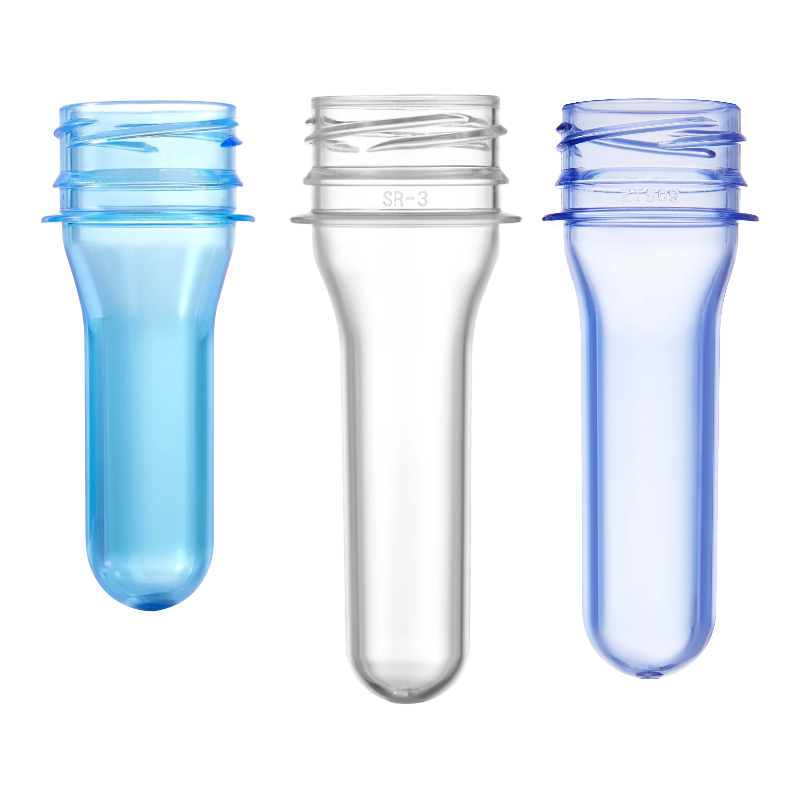
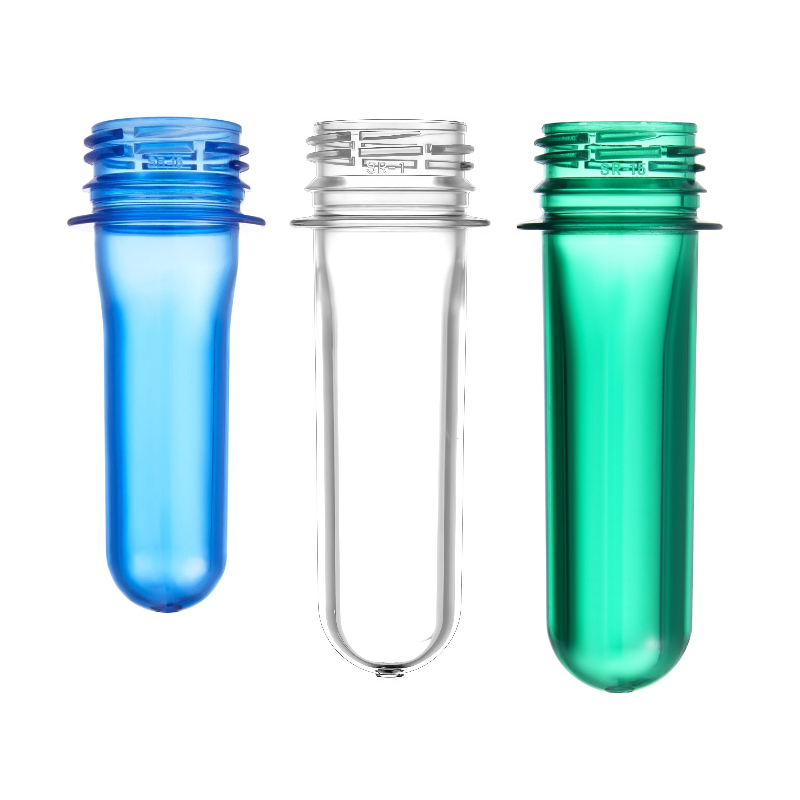
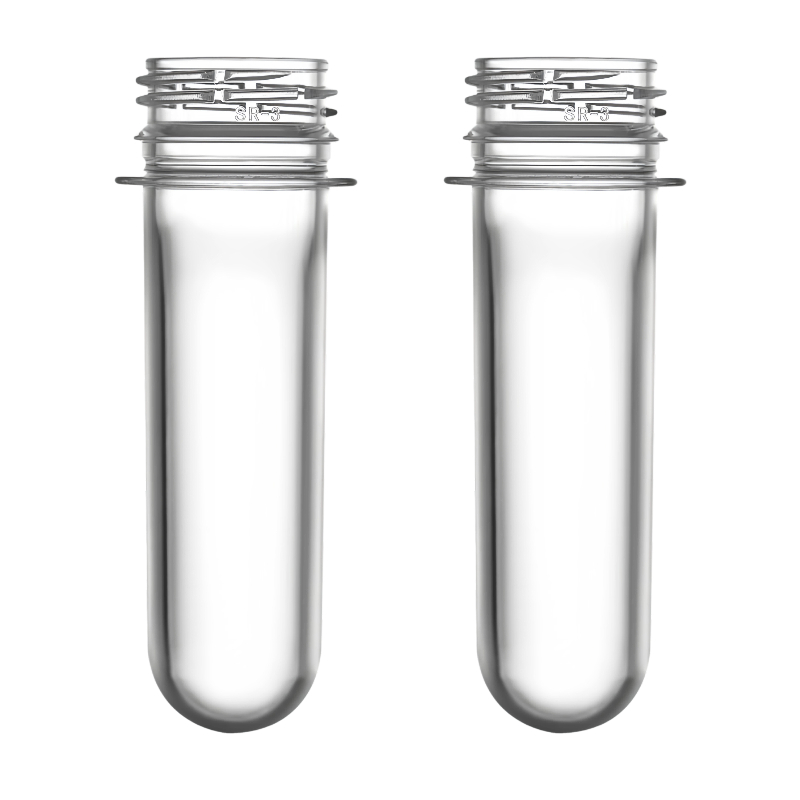
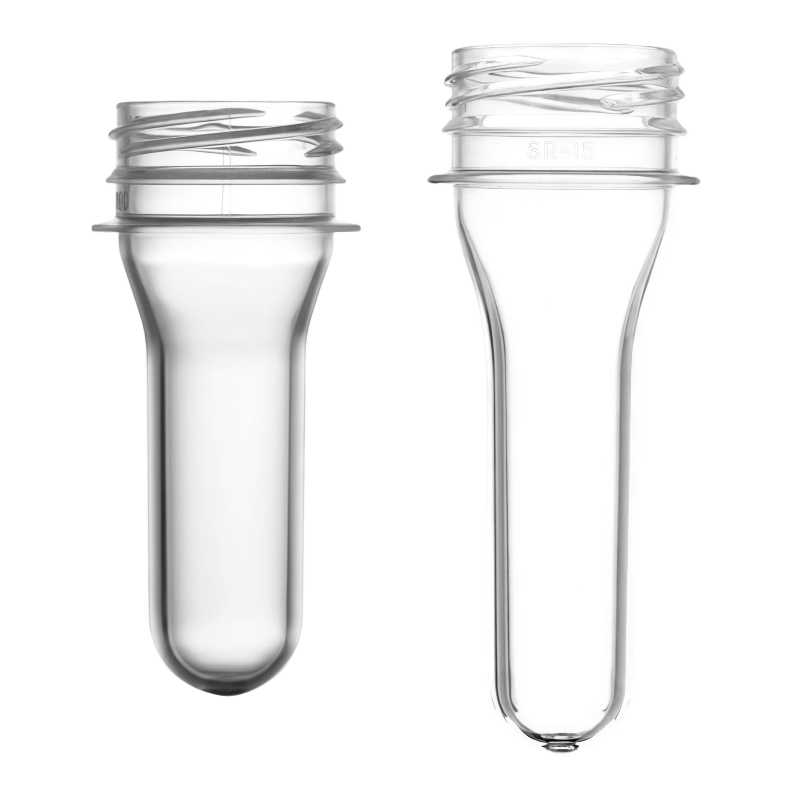
The notch is a precisely engineered circumferential groove — or in some designs, a pair of symmetrical grooves — machined into the outer surface of the preform neck, typically positioned just below the support ring (also called the transfer ring or capping flange). This zone sits between the threaded finish and the body of the preform, in the region that interacts most directly with filling-line rinsing heads and conveyor rails.
Two primary notch configurations exist in commercial PET preform production. The single-notch design places one circumferential channel at a defined depth below the support ring, optimized for standard rinsing systems. The dual-notch design adds a second parallel groove, typically used in high-speed filling environments where water volume and drainage speed are higher. Depth, width, and angular profile of the groove vary by application, neck diameter, and fill type — though all serve the same fundamental function: managing liquid behavior during bottle inversion rinsing.
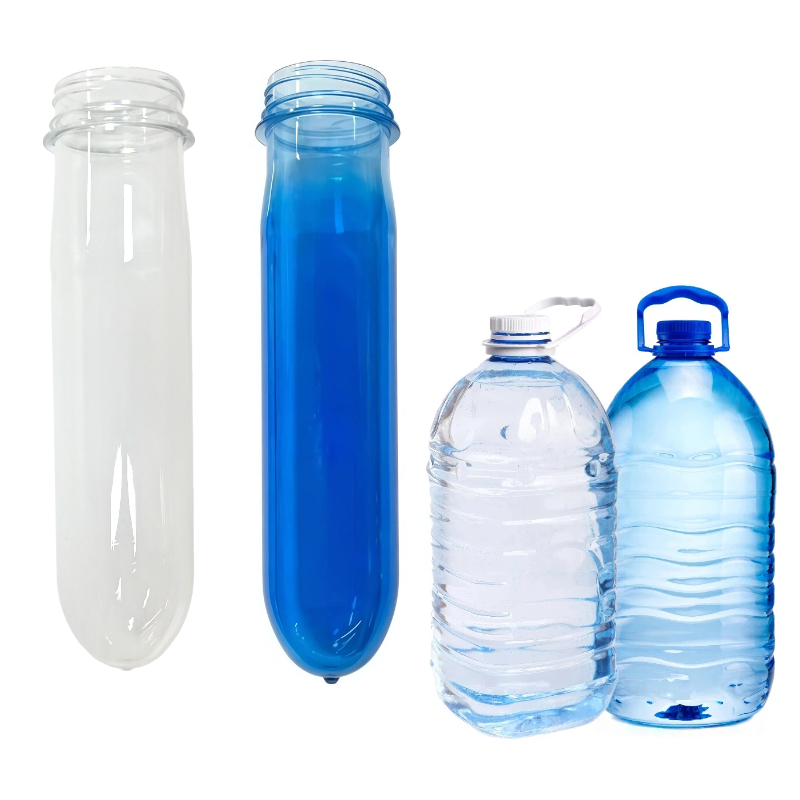
Critically, the notch is formed entirely during injection molding. Because the neck finish is never heated or stretched during the subsequent blow molding stage, every dimension in the notch zone — including groove geometry — is permanently fixed at the injection stage. This means notch quality is entirely a function of mold precision and processing control.
The Engineering Logic Behind Notch Design
To understand why notch geometry matters, consider what happens on a filling line without one. After an empty bottle is inverted and rinsed, a small volume of water inevitably pools at the neck shoulder and inner rim. Surface tension keeps this water in place rather than draining freely. In a high-speed line producing 20,000–30,000 bottles per hour, that residual moisture accumulates across thousands of units, creating a contamination vector that standard rinsing cannot fully eliminate.
The notch disrupts this behavior through two mechanisms. First, the groove creates a capillary break — a geometric discontinuity that prevents water from climbing back up the neck surface by capillary action. Second, when the bottle is inverted and rinsed, the notch acts as a flow channel, directing water away from the sealing surface and toward the bottle interior, where it drains by gravity. The result is a drier neck finish at the point of filling.
From an engineering standpoint, the critical variables are groove depth (typically 0.3–0.8mm depending on neck diameter), groove width (0.4–1.2mm), and the transition angle between the groove wall and the support ring underside. A groove that is too shallow fails to break the capillary film; one that is too deep can create a stress concentration point that affects neck ring integrity under capping torque. This is why notch design is not a generic feature but a dimension that should be specified in relation to the closure system and filling-line parameters. For a detailed look at the full preform design methodology — from neck finish diameters to stretch ratios — the preform design engineering reference from Apex Container Tech provides a useful technical foundation.
Hygiene Benefits: Reducing Contamination on High-Speed Filling Lines
The hygiene case for notch design is strongest in aseptic and near-aseptic filling environments, where residual rinsing water in the neck zone is not merely an inconvenience — it is a genuine microbiological risk. Still water in a confined groove, warmed by the ambient temperature of a production floor, is a favorable environment for bacterial proliferation. Listeria and Pseudomonas species in particular are capable of forming biofilms on PET surfaces under these conditions.
A well-designed notch reduces dwell time of rinsing water in the neck area by improving drainage angle and velocity during inversion. The groove essentially converts a static pooling zone into an active drainage channel. In practical terms, this means the sealing surface — the flat rim of the bottle neck against which the closure liner makes contact — reaches the filling station drier and with lower microbial load.
For carbonated beverage applications, the benefit extends beyond hygiene. CO₂ supersaturation at filling means any liquid contaminant on the sealing surface can act as a nucleation site, triggering premature degassing and inconsistent fill levels. A notch-equipped preform reduces this risk by keeping the fill zone free of residual rinse water. The result is more consistent fill volumes, fewer rejected units, and cleaner line performance across multi-shift production runs.
Production Efficiency Gains from Notch-Optimized Preforms
Hygiene and efficiency are usually discussed separately, but in beverage packaging they are tightly linked. Every contamination event that requires a line stop for inspection or cleaning represents lost throughput. Notch design contributes to efficiency at three operational points.
The first is rinsing cycle time. Filling lines running notch-equipped preforms can reduce rinser dwell time because the groove geometry accelerates drainage. On a high-speed line, even a 5–10% reduction in rinser dwell time translates to a meaningful increase in output per hour without adding mechanical capacity.
The second is conveyor rail compatibility. Modern PET bottle filling lines use air-conveyor and starwheel systems that grip preforms at the support ring. The notch, positioned just below this ring, provides an additional reference surface for precise orientation and positioning. This is particularly valuable in rotary blow-wheel machines where angular alignment of the preform affects wall thickness distribution in the blown bottle.
The third is rejection rate reduction. Preforms with poorly formed or absent notch features generate proportionally higher rejection rates during QC inspection at the filler, as the sealing surface fails moisture checks. Consistent notch geometry — achievable only with high-precision injection molds and stable processing parameters — is therefore a direct contributor to overall equipment effectiveness (OEE) on the filling line.
Notch Design Across Different Neck Standards: 28mm PCO, 30mm, and 38mm
Notch design does not exist in isolation — it must be coordinated with the neck finish standard, which defines the thread profile, support ring geometry, and the mechanical loads the neck will experience at filling and capping. The three most commercially significant standards each impose different constraints on notch specification.
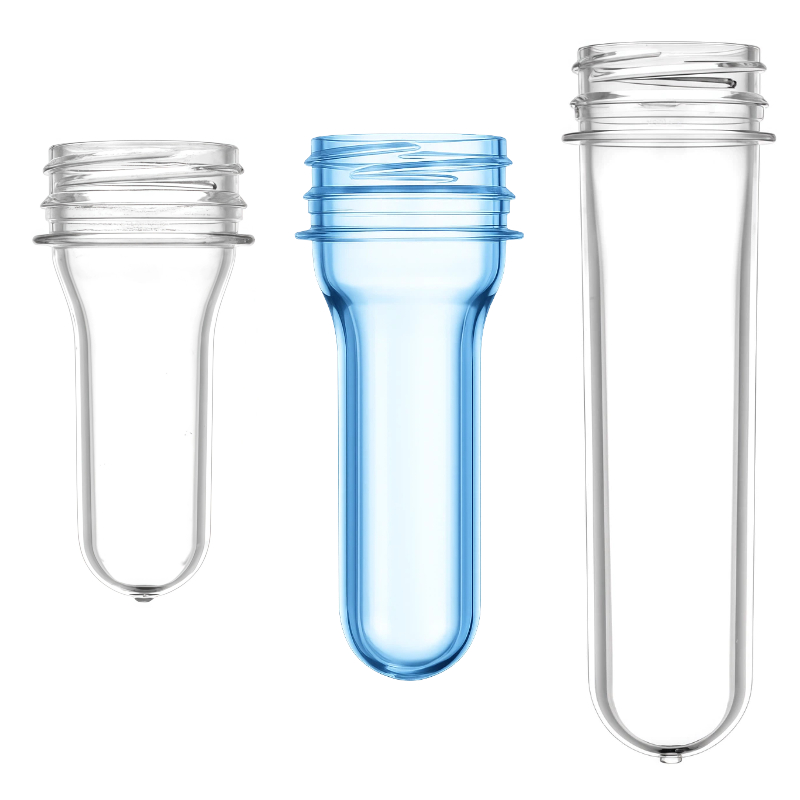
28mm PCO (PCO 1881 and PCO 1810): The PCO standards defined by the International Society of Beverage Technologists (ISBT) govern the geometry of the 28mm neck finish used across carbonated soft drinks and water. PCO 1881, the shorter and lighter of the two at 17mm neck height and approximately 3.74g, has a more compact zone below the support ring. This compresses the available space for the notch groove, requiring tighter dimensional tolerances to maintain groove integrity without impinging on the support ring underside. PCO 1810, with its taller 21mm neck finish, provides slightly more clearance. For a detailed comparison of how the two standards differ in thread pitch, neck weight, and capping compatibility, see the guide to PCO 1881 vs PCO 1810 key differences. Our 28mm PCO 1881 and PCO 1810 preforms are produced with notch geometry validated against both standards.
30mm (30/25 and short-neck variants): The 30mm neck finish is widely used for still water and non-carbonated beverages. Its slightly larger diameter and varied thread heights across the 30/25 and short-neck configurations create more design freedom for notch placement. The larger inner bore (25mm) also means that drainage from the notch channel is less likely to be obstructed by residual water surface tension inside the neck. Our range of 30mm PET preform options includes configurations designed for both standard and high-throughput filling equipment.
38mm (wide-mouth and sports caps): The 38mm finish presents the most notch design flexibility, owing to its larger neck diameter and the generally lower fill speeds associated with juice, dairy, and sports drink applications. Here, notch profiles can be wider and deeper without compromising neck ring structural integrity. The broader sealing surface also means that drainage efficiency at the notch has a proportionally greater impact on fill-zone cleanliness. The 38mm PET preform series covers the full range of sports beverage and juice packaging applications.
| Neck Standard | Neck Height | Notch Zone Clearance | Primary Application |
|---|---|---|---|
| PCO 1881 (28mm) | 17mm | Compact — tight tolerances required | CSD, carbonated water |
| PCO 1810 (28mm) | 21mm | Moderate — standard groove geometry | CSD, sparkling water |
| 30/25 (30mm) | Varies | Moderate to wide — drainage optimized | Still water, beverages |
| 38mm wide-mouth | Varies | Wide — maximum design flexibility | Juice, dairy, sports |
Quality Indicators: How to Evaluate Notch Precision in PET Preforms
For procurement teams and quality engineers, notch quality is one of the most telling indicators of overall preform manufacturing precision. A supplier capable of holding tight tolerances on a small-radius groove — a feature that requires well-maintained mold steel, stable melt temperature control, and consistent cooling — is almost certainly producing consistent wall thickness and neck geometry across the rest of the preform as well.
Practical evaluation begins with visual inspection under directional lighting. A correctly formed notch should show a clean, sharp groove edge with no burrs, flow marks crossing the groove, or visible weld lines within the channel. Burrs indicate mold wear at the groove insert; flow marks suggest inconsistent injection velocity or temperature during molding. Either defect affects drainage performance.
Dimensional verification uses a groove gauge or contact profilometer to check depth, width, and radius consistency across a sample batch. The target tolerances will vary by neck standard, but a general rule is that depth variation across a production lot should not exceed ±0.05mm. Beyond this threshold, drainage consistency begins to degrade.
A functional test — the most operationally relevant — involves inverting a sample preform, filling the neck with a small volume of water, and measuring drain time. A well-designed notch will drain the neck interior in under two seconds from inversion. Preforms that retain water for longer than three seconds are a practical disqualifier for high-speed aseptic applications. For a broader framework on incoming inspection of PET preforms, including dimensional and visual checks beyond the notch, see the detailed guide to PET preform quality inspection.
Common defect modes specific to the notch zone include partial fill (the groove is present but shallower than specified on part of the circumference due to core misalignment), gate-side asymmetry (notch depth varies depending on proximity to the injection gate), and post-ejection deformation (the groove edge deflects during ejection if cooling time is insufficient). Each of these can be detected through proper incoming inspection and should be addressed at the mold level, not papered over through rinsing-parameter adjustments on the filling line.
Specifying notch geometry explicitly in your preform purchase order — rather than relying on a supplier's default design — is the single most effective step a packaging procurement team can take to ensure consistent hygiene performance across their filling operations. A notch that meets dimensional spec on paper but delivers inconsistent drainage in production is always a mold and process quality issue, and it is correctable at the source.