

 English
Why Your Bottles Deform After Filling — The Problem Starts with the Preform
Content
- 1 What "Bottle Deformation After Filling" Actually Means
- 2 The Root Cause: Why the Preform Is Usually the Starting Point
- 3 Key Preform Factors That Lead to Post-Filling Deformation
- 4 How Filling Conditions Amplify Preform-Related Weaknesses
- 5 How to Evaluate Whether Your Preform Is the Problem
- 6 Choosing a Preform That Holds Its Shape
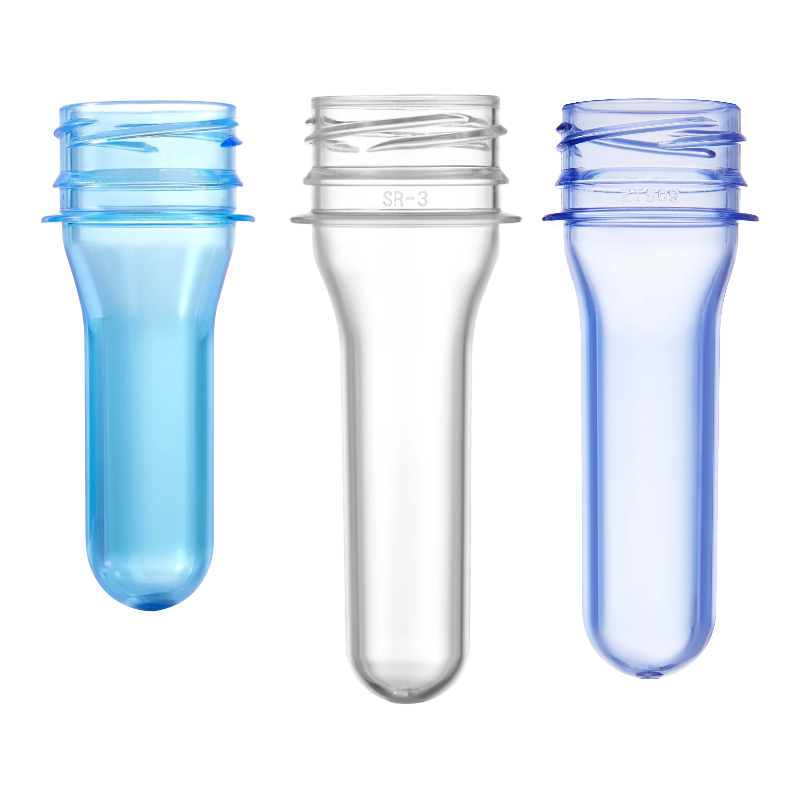
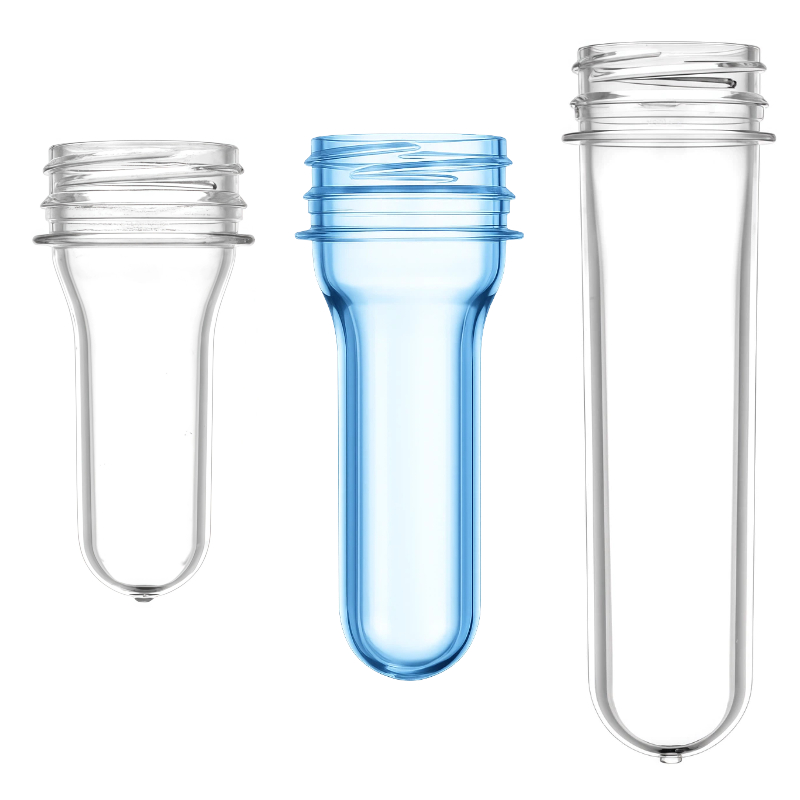
Bottle deformation after filling is one of the most disruptive quality failures in beverage and water packaging lines. When bottles arrive distorted, collapsed, or misshapen after filling, the instinct is to adjust the filling machine, the conveyor speed, or the capping pressure. But in a significant share of cases, the real origin of the problem is upstream — in the PET preforms used to blow those bottles. Understanding why deformation happens, and where it truly begins, is the fastest path to fixing it permanently.
What "Bottle Deformation After Filling" Actually Means
Deformation is not a single symptom. It manifests in several distinct ways, each pointing to a different failure mechanism:
- Sidewall collapse or paneling: The bottle walls buckle inward, often appearing as flat panels or concave indentations. This is especially common in hot-fill applications where internal vacuum develops as the liquid cools.
- Base distortion: The bottom of the bottle bulges outward or shifts, causing the bottle to lean or rock on a flat surface.
- Neck and finish deformation: The threaded neck area warps, preventing proper cap sealing or causing leaks.
- Overall height change: Bottles shrink vertically or become shorter than specification, disrupting labeling and secondary packaging.
Each of these forms of deformation can result from filling process parameters — but each can also be traced back to a preform that lacked the structural properties needed to withstand real-world filling conditions.
The Root Cause: Why the Preform Is Usually the Starting Point
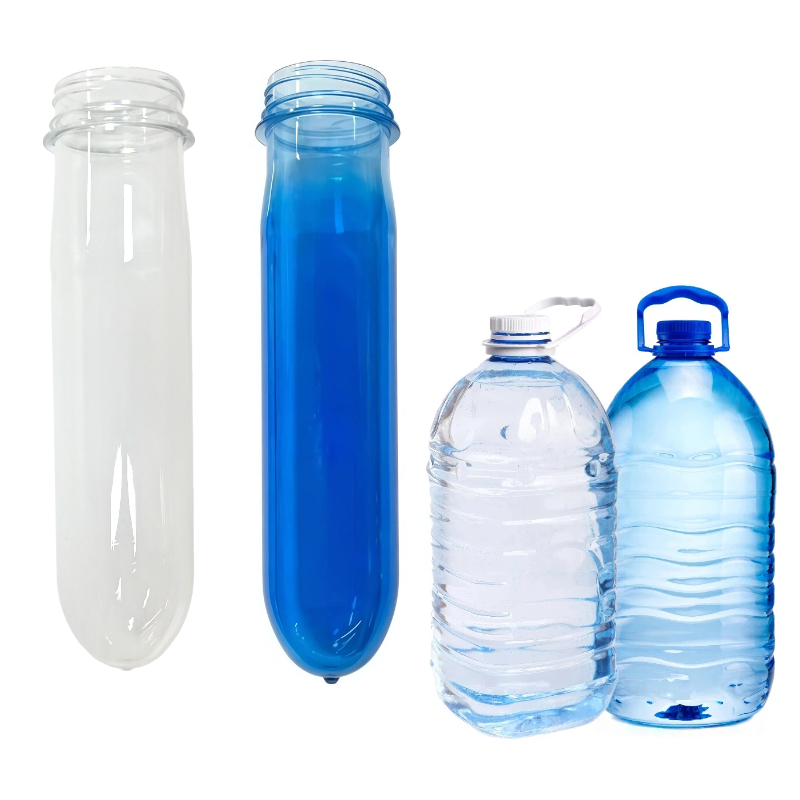
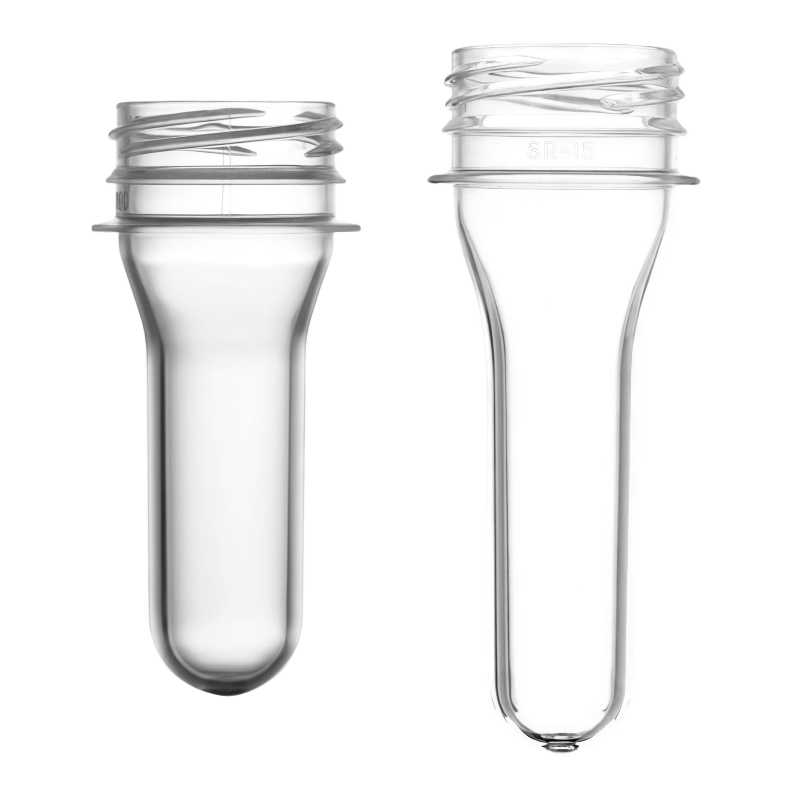
A finished PET bottle is only as strong as the preform it was blown from. The blow-stretch process transforms the preform's material properties — its molecular orientation, wall thickness distribution, and crystallinity — into the final structural characteristics of the bottle. If the preform contains a flaw, that flaw does not disappear during blowing. It is stretched, thinned, and amplified.
Consider the chain of events: a preform with uneven wall thickness enters the blow mold. The thinner sections stretch more aggressively, producing localized areas of lower material density in the finished bottle. Under filling pressure, heat stress, or vacuum — depending on the filling method — those thin zones are the first to fail. The operator sees bottle deformation; the root cause is actually a preform defect that occurred hours or days earlier in the production process.
This upstream origin is why adjusting filling line parameters often provides only partial or temporary relief. The structural problem was baked in before the bottle ever existed.
Key Preform Factors That Lead to Post-Filling Deformation
Wall Thickness Uniformity
Wall thickness variation is the most common preform-related cause of bottle deformation. Industry-standard tolerances for preform wall thickness typically fall within ±0.1 to ±0.15 mm. When variation exceeds this range — due to poor mold alignment, inconsistent injection speed, or material flow imbalances — the resulting bottle will have structurally weak zones. Even a 0.2 mm thickness deficit in a critical area can reduce local burst strength by 15–25%, more than enough to cause visible deformation under standard filling conditions.
Intrinsic Viscosity (IV) of the PET Resin
IV is a direct measure of PET molecular chain length and affects the material's ability to stretch and retain strength after blowing. Standard PET preforms for water bottles typically require an IV in the range of 0.76–0.80 dL/g. When IV drops below 0.72 dL/g — due to over-drying, excessive regrind use, or poor resin quality — the blown bottle exhibits reduced rigidity and creep resistance. Under the mechanical stresses of high-speed filling, low-IV bottles are more susceptible to permanent deformation.
Preform Weight and Wall-to-Volume Ratio
Matching preform weight to target bottle volume is a fundamental engineering requirement. A preform that is too light for the intended bottle volume produces walls that are too thin after blowing, regardless of how well the blow process is controlled. As a reference point, a standard 500 ml mineral water bottle typically requires a preform weighing between 18 g and 22 g depending on design specifications. Underweight preforms generate bottles that look structurally complete but cannot sustain filling loads — particularly in hot-fill or high-speed cold-fill environments. For a detailed breakdown of weight-to-volume matching, see preform weight selection.
Gate and Body Crystallinity
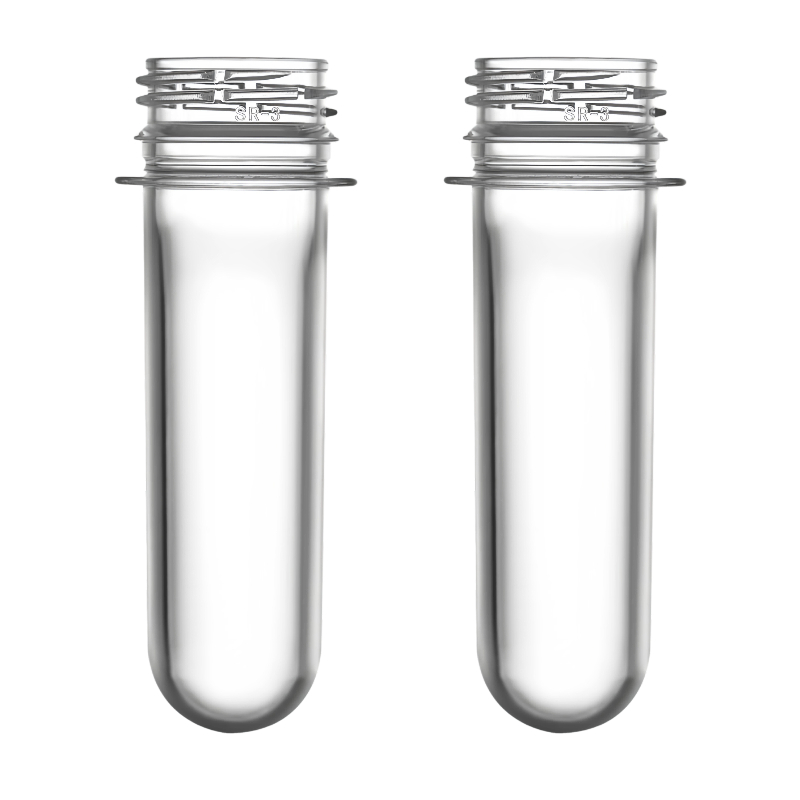
The gate area — the injection point at the base of the preform — is the last zone to cool during molding. If cooling is insufficient, this area retains excess heat and develops stress concentrations. In the blown bottle, the gate becomes the bottom center of the base. Under filling pressure or thermal stress, a gate with poor crystallinity control is one of the most common sites for base deformation and pearlescence (whitening), which signals that the material has been stretched beyond its recoverable elastic range.
Moisture Content at Injection
PET resin must be dried to below 50 ppm moisture content before injection molding. Moisture above this threshold causes hydrolytic degradation during processing — breaking molecular chains and permanently reducing IV. The degraded preform produces a bottle with brittle walls and compromised impact resistance. High moisture is one of the less visible preform defects because the finished preform may appear normal to the eye, yet the bottle will fail under the mechanical demands of the filling line.
How Filling Conditions Amplify Preform-Related Weaknesses
Filling conditions do not create structural weaknesses in bottles — they reveal them. A preform with borderline properties may produce bottles that pass basic quality checks under ambient conditions, only to fail visibly when exposed to the stresses of the actual filling process. The following table summarizes how different filling methods interact with common preform deficiencies:
| Filling Method | Key Stress Applied to Bottle | Preform Weakness Most Likely to Cause Failure | Typical Deformation Type |
|---|---|---|---|
| Cold fill (still water) | Internal pressure + capping torque | Low preform weight, thin sidewalls | Paneling, sidewall collapse |
| Hot fill (juices, teas) | Thermal stress + vacuum on cooling | Low IV, non-heat-set preform design | Severe paneling, shoulder distortion |
| Carbonated beverage | Internal pressure (3.7–6.2 bar) | Gate crystallinity defect, base thickness | Base bulge, petaloid failure |
| Aseptic / sterile fill | Heat treatment + chemical exposure | Moisture-degraded resin, low IV | Neck warp, overall shrinkage |
In each scenario, the filling process is applying a predictable, measurable stress. The preform either has the structural properties to absorb that stress without permanent deformation — or it does not. When it does not, deformation is the inevitable result.
How to Evaluate Whether Your Preform Is the Problem
Before making adjustments to the filling line, a structured preform audit can isolate whether the deformation is truly originating at the preform stage. The following checks are practical starting points:
- Weigh a sample batch of preforms: Measure 20–30 preforms from the same lot and calculate the variance. A standard deviation greater than 0.3 g on a 20 g preform is a red flag indicating inconsistent injection fills.
- Check wall thickness at multiple points: Use an ultrasonic thickness gauge to measure the preform body at the gate, midpoint, and shoulder. Differences greater than 0.15 mm between zones indicate uneven material distribution.
- Conduct a top-load test on blown bottles: Apply a controlled vertical load to the empty bottle before filling. If the bottle fails below the specification (typically 20–35 kg for a 500 ml water bottle), the preform material properties are likely insufficient.
- Review the preform IV certification: Request the resin IV test report from your preform supplier. If IV values are not documented or fall below the specification range for your bottle application, material degradation during processing is a probable cause.
- Compare deformation patterns with preform lot numbers: If deformation rates correlate with specific production lots of preforms, the evidence strongly points to a preform-sourcing or preform-manufacturing issue rather than a filling line issue.
For a comprehensive testing protocol, the principles outlined in PET preform analysis provide detailed guidance on acceptance limits and defect classification.
Choosing a Preform That Holds Its Shape
Solving a bottle deformation problem through better preform selection requires matching the preform specification precisely to the filling application — not simply finding a standard preform that is close enough. The most critical specification factors to align are:
- Neck finish standard: The neck finish (28mm PCO 1881, 30mm, 38mm, etc.) must match the cap specification exactly. A mismatched finish leads to seal failures that mimic deformation under internal pressure. See available PET preforms by neck size to confirm compatibility.
- Preform design for filling temperature: Hot-fill applications require preforms designed for heat-set blowing, which induces a crystallinity level of 25–35% in the bottle sidewall to resist thermal distortion. Standard cold-fill preforms will deform significantly at fill temperatures above 60°C.
- Wall thickness specification for target volume: Confirm that the preform's body wall thickness, after blow-stretch at the standard stretch ratio for your mold, produces finished wall thickness above 0.25 mm at the thinnest point for still water, or above 0.30 mm for carbonated beverages.
- Resin grade and additive package: For UV-sensitive beverages or bottles requiring enhanced barrier performance, the base resin specification and additive package in the preform affect long-term structural integrity as well as product shelf life.
Working with a supplier who can provide documented preform specifications, including resin IV certification, weight tolerances, and mold cavity traceability, gives you the data needed to make informed procurement decisions. Before placing a new preform order, the checklist in factors before ordering PET preforms covers the specification review process in full.
Bottle deformation after filling is a production problem with a clear engineering solution. In the majority of persistent deformation cases, fixing the preform specification eliminates the symptom entirely — without any changes to the filling line. Start the investigation upstream, and the answer is usually found there.