

 English
PET Preform Analysis: QC Tests, Defects, Data & Fixes
Content
- 1 Acceptance targets that make PET preform analysis actionable
- 2 Test methods that reliably explain blow-molding results
- 3 Defect-to-cause mapping for PET preform analysis
- 4 Process levers: what to adjust based on what you measure
- 5 A simple SPC routine for PET preform analysis (that operators will actually use)
- 6 Conclusion
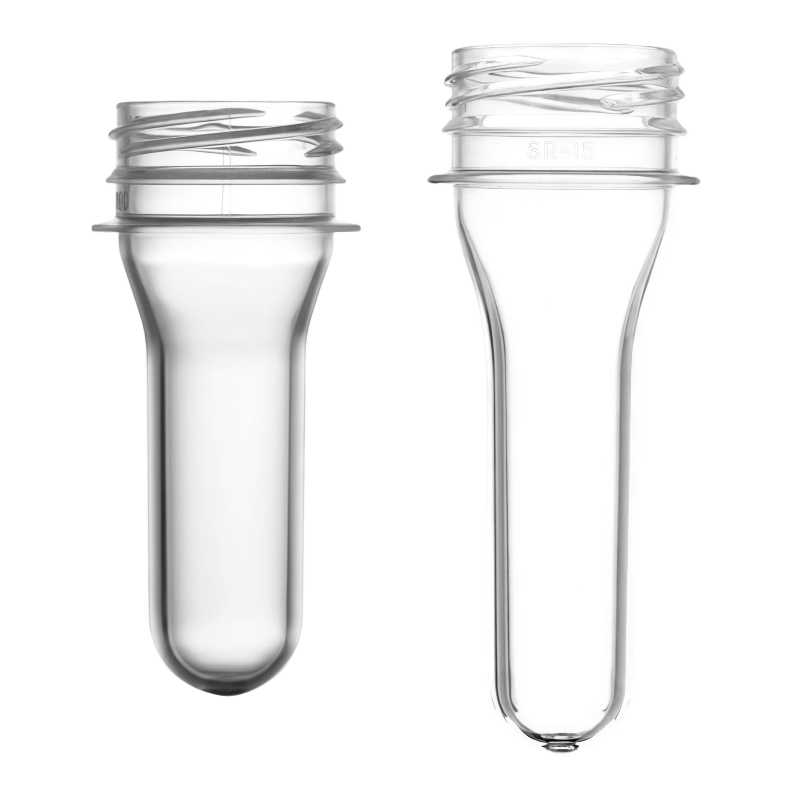
PET preform analysis is most effective when it starts with measurable acceptance limits and a defect-to-root-cause map. If you control preform weight (±0.2–0.5%), moisture (<50 ppm), and IV drift (±0.02 dL/g) with basic SPC, most downstream blowing problems (pearlescence, haze, uneven thickness, burst failures) drop sharply.
Acceptance targets that make PET preform analysis actionable
A preform can look “fine” and still blow poorly. Set a small set of targets that correlate strongly with bottle performance, then audit them per cavity and per resin lot.
Core QC metrics (start here)
- Weight: typical line capability supports ±0.2–0.5% (e.g., 24.00 g ±0.08–0.12 g). Outliers often signal gating, hot-runner imbalance, or hold issues.
- Moisture after drying: keep pellets at <50 ppm (many plants run 20–40 ppm) to prevent hydrolysis and IV loss.
- Intrinsic viscosity (IV): track drift to ±0.02 dL/g for stable stretch-blow behavior; larger drift shows up as inconsistent burst strength and thickness distribution.
- AA (acetaldehyde): for water-grade, many operations aim around <10 ppm in preforms (exact limit depends on brand/sensory requirements).
- Dimensions: neck finish criticals (thread OD/ID, tamper band, sealing land) should hold tight Cp/Cpk; small drifts cause leaks more reliably than visual checks.
| Parameter | Practical target / trigger | What it predicts |
|---|---|---|
| Pellet moisture | <50 ppm (alert at 50–80 ppm) | IV loss, brittleness, haze, higher scrap |
| IV (resin/preform) | ±0.02 dL/g drift from baseline | Stretch stability, burst, thickness balance |
| Preform weight | ±0.2–0.5% (by cavity) | Shot consistency, wall distribution |
| AA | <10 ppm (water-grade starting point) | Taste/odor risk, overheat history |
| Neck finish dimensions | Cpk focus on sealing land / thread | Leak rate, cap application torque |
Test methods that reliably explain blow-molding results
A good PET preform analysis routine uses a few fast shop-floor tests and a couple of lab confirmations. The goal is to link each test to a failure mode so your team knows what to adjust.
Fast checks (per shift, per cavity sampling)
- Weight and key dimensions (neck finish gauges, overall length): trend per cavity and per hot-runner drop.
- Visual defect screening under consistent lighting: gate blush, splay, black specs, bubbles, short shots.
- Polarized-light inspection for stress/birefringence: quickly shows over-packing, uneven cooling, or cavity-to-cavity temperature mismatch.
Lab checks (daily/weekly or after changes)
- Moisture (Karl Fischer or validated moisture analyzer) on dried pellets and/or regrind blend.
- IV (solution viscometry or equivalent) to confirm hydrolysis or resin-lot variation.
- AA via GC for taste-sensitive applications and to validate melt/hold-time settings.
Practical rule: if a defect shows up on the blower but not in preform visuals, prioritize moisture, IV, and reheat uniformity checks before changing the mold.
Defect-to-cause mapping for PET preform analysis
Most recurring problems fall into a short list of mechanisms: moisture hydrolysis, shear/overheat, contamination, and imbalance (thermal or flow). Use this map to narrow troubleshooting quickly.
| Observed issue | Likely mechanism | First checks | First fixes |
|---|---|---|---|
| Splay / silver streaks | Moisture/volatiles | Pellet moisture, dryer dew point, hopper residence | Lower moisture to <50 ppm, verify dryer seals and airflow |
| Bubbles/voids | Moisture or decompression | Moisture, screw decompression, back pressure | Improve drying, tune decompression/back pressure |
| Black specks | Degraded polymer/contamination | Hot-runner history, dead spots, filter screen | Purge, reduce hold time, clean hot runner, improve filtration |
| Gate blush / whitening | High shear or stress | Gate temperature, injection speed, pack/hold | Lower shear (speed profile), tune pack/hold, balance drops |
| Short shots | Insufficient fill or restriction | Melt temp, shot size cushion, venting | Increase shot/pressure, check vents, inspect gate restrictions |
| Haze after blowing | Reheat non-uniformity or contamination | Preform wall map, IR oven settings, AA/IV drift | Tune reheat profile, tighten weight/IV, stabilize moisture |
Process levers: what to adjust based on what you measure
PET preform analysis only pays off when each metric has a corresponding “first move.” The checklist below connects measurements to high-yield adjustments.
If moisture is high
- Verify dryer dew point and airflow; leaks and wet return air are common culprits.
- Increase residence time in the dryer/hopper, not just temperature.
- Control regrind ratio and ensure regrind is dried to the same standard as virgin.
If IV is drifting downward
- Treat it as hydrolysis until proven otherwise: confirm moisture and drying control first.
- Reduce melt residence/hold time (especially at high barrel/hot-runner temperatures).
- Stabilize regrind usage; IV loss compounds with repeated heat history.
If weight varies by cavity
- Trend by hot-runner drop: imbalance often follows heater, thermocouple, or restriction differences.
- Check cushion consistency and transfer position stability; drifting transfer is a fast path to scatter.
- Audit pack/hold profile; over-packing can raise stress and create birefringence differences between cavities.
A simple SPC routine for PET preform analysis (that operators will actually use)
You do not need a complicated system to catch problems early. A minimal SPC plan using weight and one critical dimension will detect most drift before it becomes scrap.
Sampling pattern
- Per shift: sample at least 1 preform per cavity for weight, and 1 per 4 cavities for a neck critical (adjust to your mold size).
- After any change (resin lot, dryer settings, hot-runner work): repeat the full cavity map.
What to trend
- Cavity average and range (max–min) for weight: range widening is often the earliest signal.
- Top-3 “worst cavities” list: focus maintenance and drop balancing where it matters.
- Moisture and IV as lot-level control metrics: use them to decide whether a defect is material-driven or process-driven.
Bottom line: if your SPC holds weight and moisture stable, most “mystery” blow-molding defects stop being mysteries.
Conclusion
Strong PET preform analysis comes down to disciplined measurement and fast cause isolation. Control moisture (<50 ppm), keep IV drift within ±0.02 dL/g, and hold cavity weight within ±0.2–0.5%. Then use defect mapping to choose the first corrective action—drying and residence time for splay/IV loss, thermal/shear tuning for gate blush and AA, and hot-runner balancing for cavity-to-cavity weight scatter.