

 English
How to Cut Beverage Packaging Costs by Optimizing Preform Design
Content
- 1 Weight Reduction: The Most Direct Path to Resin Savings
- 2 Neck Finish Optimization: Savings Hidden in the Thread
- 3 Wall Thickness Distribution: Engineering Uniformity, Not Just Thinness
- 4 Material Selection: When Resin Grade Affects More Than Just Price
- 5 Consolidating SKUs: Fewer Designs, Lower Total Cost
- 6 The Cost of Not Optimizing
For beverage brands producing at scale, packaging cost is not a fixed number — it is an engineering outcome. The decisions made at the preform design stage, long before a single bottle reaches the filling line, determine how much resin is consumed, how efficiently the blow molding process runs, and what the true cost per unit looks like across millions of cycles. Optimizing preform design is one of the highest-leverage actions a beverage operation can take to improve margins without touching product quality.
Weight Reduction: The Most Direct Path to Resin Savings
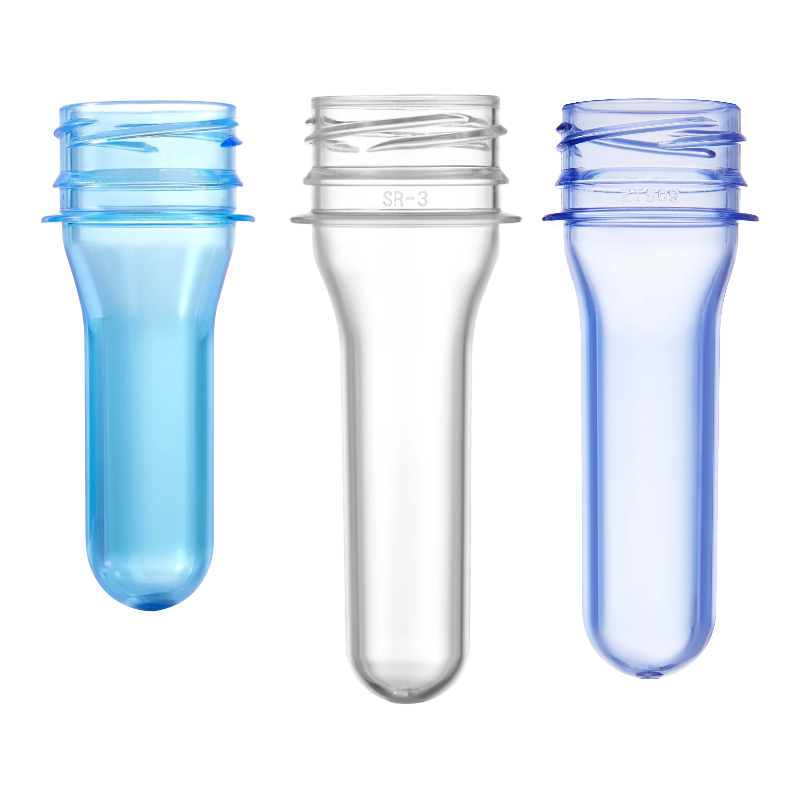
Every gram of PET resin in a preform has a cost. At high production volumes, even a 1–2 gram reduction per preform translates into substantial annual savings on raw materials alone. This approach — commonly called lightweighting — works by thinning the body wall of the preform while preserving the structural integrity of the blown bottle through precise geometry adjustments.
The key constraint is performance. A lighter preform must still produce a bottle that withstands internal pressure, top-load stress during palletizing, and the mechanical demands of high-speed filling lines. This means lightweighting is not simply "using less plastic" — it requires recalculating wall thickness distribution, stretch ratios, and base geometry in parallel. Done correctly, the blown bottle performs identically to its heavier predecessor; done carelessly, it generates defects and waste that erase the savings entirely.
Understanding the relationship between gram weight and application requirements is the starting point. A detailed breakdown of how preform weight affects bottle production cost helps quantify where reductions are viable and where the performance floor is firm. For a practical starting reference, matching preform weight to bottle volume provides application-specific benchmarks across common beverage formats.
Neck Finish Optimization: Savings Hidden in the Thread
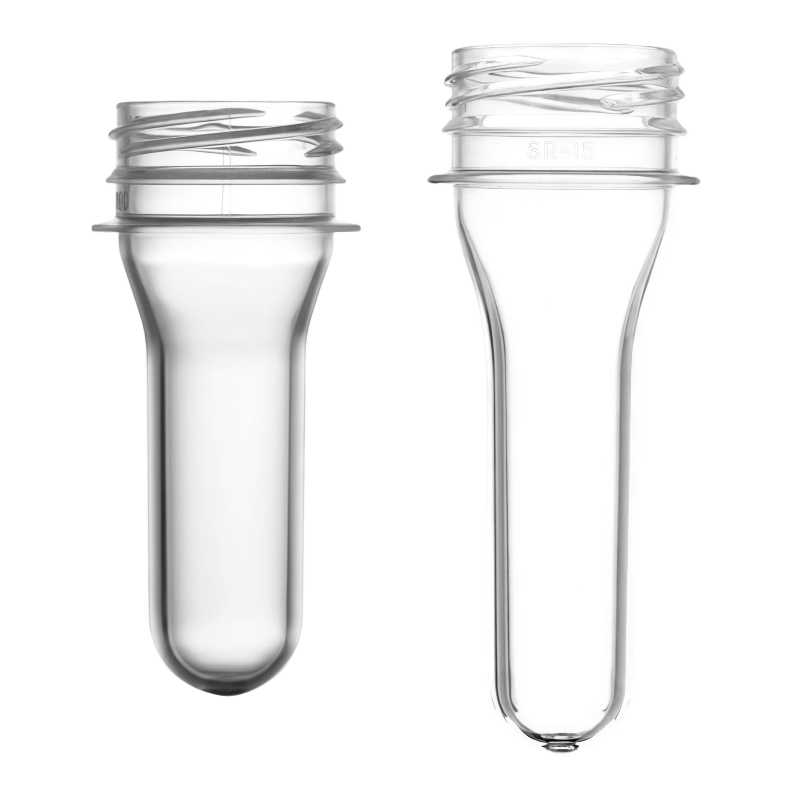
The neck finish is often overlooked in cost discussions because it is not the most visually prominent part of the bottle. Yet it accounts for a disproportionate share of preform resin use — the neck region is the thickest, most material-dense section of the preform and, unlike the body, it does not stretch during blow molding. What goes into the mold stays in the finished bottle.
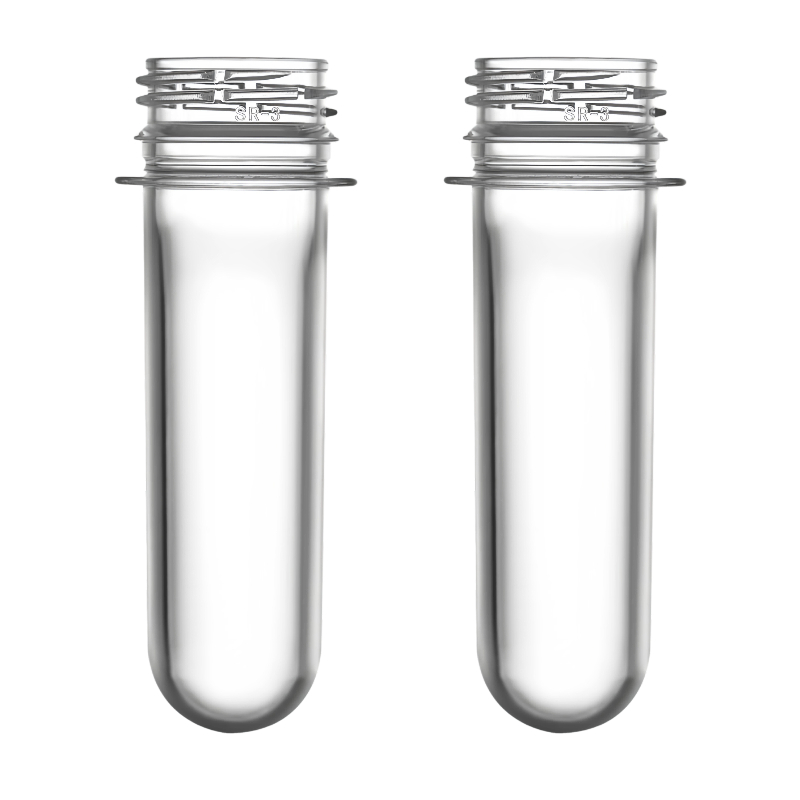
Switching from older neck standards to lighter-profile equivalents can reduce per-unit resin consumption without changing the bottle's functional performance or closure compatibility. For example, the PCO 1881 standard is already a lightweighted successor to PCO 1810, and newer lightweight variants continue to reduce neck weight while maintaining full interoperability with standard closures. Brands still running legacy neck finishes should treat this as an immediate review priority.
Any neck finish change must be validated against the closure system and filling line configuration before mass production. The dimensional tolerances involved are tight, and a mismatch causes sealing failures that are far more expensive than the resin savings achieved.
Wall Thickness Distribution: Engineering Uniformity, Not Just Thinness
Uneven wall thickness in a blown bottle is a production problem with a packaging cost attached to it. When resin is distributed unevenly during blow molding — producing thin spots in high-stress zones and excessive material in low-stress areas — the result is either structural failure or unnecessary overweighting to compensate for the weak points.
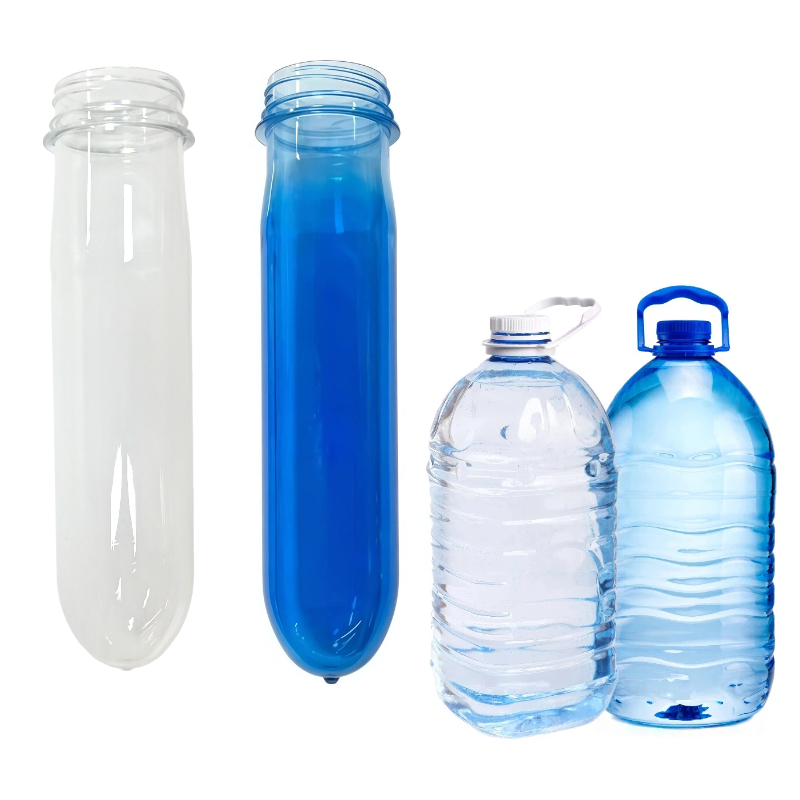
The fix begins at preform design. A well-engineered preform body controls how the PET stretches in the blow mold, directing material to where structural load demands it and reducing it where the geometry is stable. This is achieved through adjustments to the preform's axial and hoop stretch ratios — the relationship between preform dimensions and the final bottle dimensions. Brands that work with their preform supplier to model this distribution before cutting tooling consistently achieve better bottle performance at lower gram weights than those who treat the preform as a commodity input.
Material Selection: When Resin Grade Affects More Than Just Price
Not all PET resin is equivalent, and selecting the wrong grade for the application generates hidden costs that compound over time. Resin with an intrinsic viscosity (IV) level unsuited to the application — too low for carbonated beverages, too high for lightweight still-water bottles — increases defect rates, requires process compensation, and ultimately costs more in yield losses than the per-kilogram price difference suggests.
For operations incorporating rPET content, this becomes more pronounced. Recycled resin varies in IV and clarity batch-to-batch, and preform designs that work reliably with virgin PET may require adjustment when rPET content increases. Designing the preform with material variability tolerance built in — slightly conservative wall thickness targets, validated color compensation — protects yield rates as sustainability mandates push rPET percentages higher.
Buyers sourcing at volume should also evaluate the cost structure from a per-kilogram perspective rather than per-unit price alone, as resin-efficient designs change the calculation meaningfully. The PET preform price per kg breakdown and the wholesale pricing and bulk buying guide both provide useful context for structuring procurement decisions around design efficiency.
Consolidating SKUs: Fewer Designs, Lower Total Cost
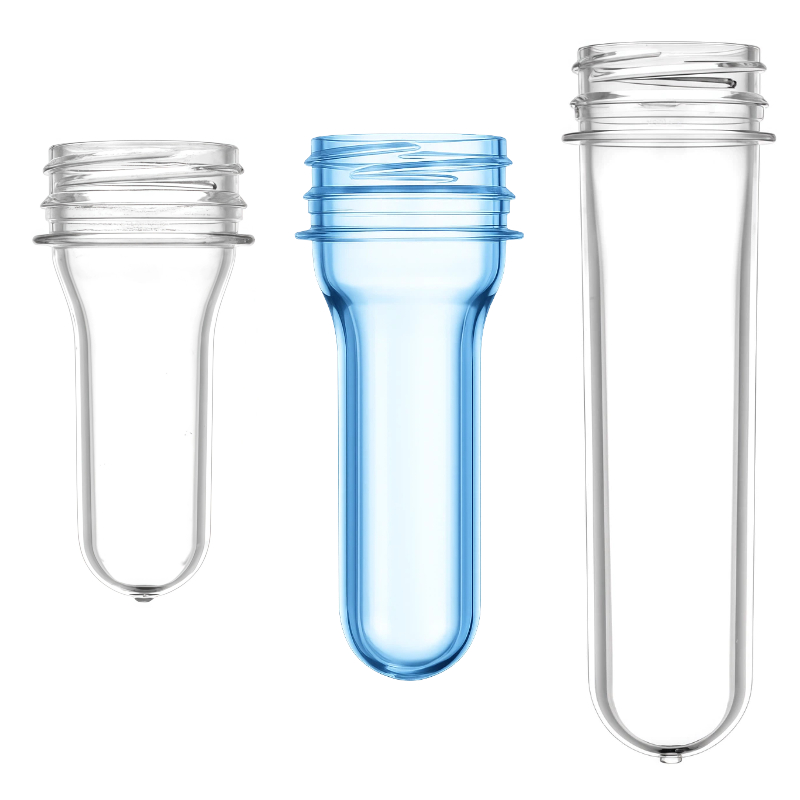
One underappreciated cost driver in beverage packaging operations is SKU proliferation. When different products use slightly different preform specifications — varying neck finishes, marginally different gram weights, non-standardized body lengths — the result is fragmented production runs, higher mold changeover frequency, and reduced purchasing leverage with suppliers.
Rationalizing the preform portfolio to share specifications across product lines where technically feasible reduces tooling investment, simplifies inventory management, and consolidates volume onto fewer SKUs — which improves per-unit pricing at the supplier level. This requires a cross-functional review of which product requirements actually demand distinct preform specs and which differences are legacy decisions that no longer serve a functional purpose.
For brands evaluating their full preform range, a structured review of how to choose the right preform for your product provides a useful framework for identifying where consolidation is viable. Our full PET preforms range supports standardized neck formats across multiple weight and application options, making cross-SKU consolidation practical for most beverage portfolios.
The Cost of Not Optimizing
The beverage packaging market operates on thin margins at high volume. A preform design that was appropriate when resin prices were lower, production volumes were smaller, or sustainability requirements were less demanding may be actively costing the business money today. Preform design optimization is not a one-time project — it is a periodic discipline that pays compounding returns as volumes grow and material costs fluctuate. The brands that treat it as an engineering priority consistently outperform those that treat their preform specification as a fixed cost.