

 English
Form of PET Preform Raw Material: Pellets, rPET, Masterbatch
Content
- 1
- 2 Direct answer: what form is PET preform raw material?
- 3 Common forms of PET preform raw material
- 4 Key specs that matter more than the physical form
- 5 Drying and handling: the “hidden” part of raw material form
- 6 How to choose the right PET preform raw material form for your application
- 7 Quick checklist for purchasing and incoming inspection
- 8 Conclusion
Direct answer: what form is PET preform raw material?
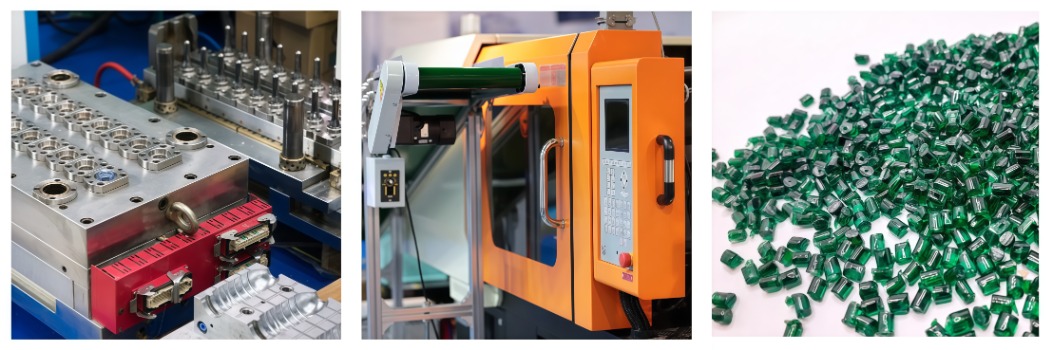
The standard form of PET preform raw material is bottle-grade PET resin in pellet (chip/granule) form, supplied in bags or bulk and fed into an injection molding machine after drying. Depending on the application and cost targets, the same preform can also use blends that include rPET pellets/flakes, controlled regrind, and color/additive masterbatch.
If you are evaluating a supplier or troubleshooting preform defects, focus on the resin’s physical form (pellet vs flakes), moisture condition, intrinsic viscosity (IV), and the additive package—these determine melt stability, clarity, and final bottle performance.
Common forms of PET preform raw material
In practice, “PET preform raw material” is not only one product. It is usually a controlled recipe built from one primary resin plus optional secondary inputs.
Virgin bottle-grade PET pellets (primary form)
Virgin PET pellets are the dominant feedstock for preforms. They are free-flowing granules designed for injection molding and reheating (blow molding). Typical beverage preforms use bottle-grade resin with IV roughly 0.72–0.86 dL/g depending on bottle size and performance requirements (higher IV generally supports higher strength and top load).
rPET (recycled PET) pellets or flakes
rPET is used to reduce cost volatility and meet sustainability targets. For preforms, rPET in pellet form is typically easier to feed consistently than flakes, while flakes can be used when the plant has robust filtration and feeding controls. Food-contact compliance, contamination control, and IV consistency are the key differentiators between rPET grades.
Regrind (internal scrap)
Regrind is ground runner scrap or rejected preforms reintroduced into the process. Many operations cap regrind usage to protect clarity and mechanical properties; a common practical range is 5–20%, adjusted based on defect rate, melt filtration, and customer specs.
Masterbatch (color and additives)
Masterbatch is supplied as concentrated pellets added at low “let-down” rates to introduce color (e.g., blue tint, amber) or functional additives (UV barrier, reheat enhancers, scavengers). Use masterbatch when you need repeatable dosing; it typically feeds better than liquid additives in high-throughput preform lines.
| Raw material form | What it looks like | Why it’s used | Main risk to manage |
|---|---|---|---|
| Virgin PET pellets | Uniform clear/whitish granules | Highest consistency for preform clarity and strength | Moisture control; IV matching to application |
| rPET pellets | Pellets, sometimes slightly tinted | Sustainability targets; cost optimization | Contaminants; color variability; IV spread |
| rPET flakes | Irregular flakes from washed bottles | Lower material cost; direct recycling streams | Feeding stability; filtration load; dust/fines |
| Regrind | Ground scrap, variable particle size | Reduces waste; improves yield economics | Haze; gels/black specks; moisture pickup |
| Masterbatch pellets | Colored or additive concentrate pellets | Accurate dosing of color/additives | Over-dosing; compatibility; streaking |
Key specs that matter more than the physical form
Two suppliers can both offer “PET pellets,” yet produce very different preform outcomes. These parameters determine whether the resin runs cleanly and whether preforms remain clear and strong.
Intrinsic viscosity (IV)
IV is a proxy for molecular weight. In preforms, IV impacts melt strength, top load, burst resistance, and stretch-blow behavior. As a practical example, larger bottles and hot-fill designs commonly require higher IV than small water bottles. If IV is too low, bottles can feel “soft” or fail mechanical targets even if the preform looks acceptable.
Moisture content before molding
PET is moisture-sensitive at melt temperatures. If resin is not dried adequately, hydrolysis can reduce IV during processing and increase defects. Many plants target ≤50 ppm moisture at the dryer outlet for stable preform quality.
Contaminants and fines
Black specks, gels, haze, and “fish-eyes” often trace back to contamination (paper, PVC, aluminum, degraded polymer) or excessive fines. This is why rPET flakes typically demand stronger filtration and better housekeeping than pellets.
- If you see haze, check moisture, regrind ratio, and contamination first.
- If you see black specks, focus on filtration, heater degradation, and foreign material control.
- If you see brittle preforms, verify IV loss from poor drying or excessive residence time.
Even perfect PET pellets will fail if handled like a non-hygroscopic resin. Drying performance effectively becomes part of the raw material “form” because it controls what reaches the screw.
Typical drying targets used in preform plants
- Dry resin to a low moisture level (commonly ≤50 ppm) to minimize hydrolysis.
- Run dryer temperatures often in the 160–180°C range with sufficient residence time (commonly 4–6 hours), adjusted to dryer design and throughput.
- Keep hopper lids closed and transfer lines dry; PET can re-absorb moisture quickly in humid environments.
Practical example: why flakes behave differently than pellets
rPET flakes have higher surface area and often more fines than pellets. This increases moisture pickup and dust, and it makes feeding less stable. Plants that switch from pellets to flakes usually add tighter screening, stronger conveying controls, and more robust melt filtration to keep preform appearance consistent.
How to choose the right PET preform raw material form for your application
Selection is mainly about risk management: balancing cost, sustainability, and production stability while meeting bottle performance and appearance requirements.
When virgin PET pellets are usually the best choice
- You require high clarity (premium water, high-visibility packaging).
- Your process window is tight (high cavitation molds, high output, limited downtime tolerance).
- You need consistent IV and color with minimal filtration complexity.
When rPET (pellets or flakes) is a strong option
- Your customer requires recycled content and you can manage tighter incoming quality controls.
- You can tolerate minor color variation (or you already run tinted bottles where variation is less visible).
- You have melt filtration and housekeeping practices suited to higher contamination risk.
How to approach regrind and masterbatch
Use regrind when it clearly improves economics without pushing haze or specks beyond specification. Masterbatch is the preferred method for consistent dosing of color and additives; keep dosage within supplier guidance to avoid streaking or over-concentration.
Quick checklist for purchasing and incoming inspection
If your goal is to confirm you’re receiving the correct form of PET preform raw material—and that it will run consistently—use the checks below.
- Verify the physical form: uniform pellets for standard feeding; flakes require additional controls.
- Confirm target IV range for your bottle design and customer spec.
- Check moisture management: resin should be stored sealed; dryer should reach stable dew point and outlet moisture targets (commonly ≤50 ppm).
- Screen for contamination and fines, especially for rPET flakes and regrind.
- Validate masterbatch compatibility and dosage to prevent streaks and haze.
Conclusion
The most common form of PET preform raw material is bottle-grade PET resin supplied as pellets. rPET (pellets or flakes), regrind, and masterbatch are widely used additions, but they require stronger controls around moisture, contamination, and dosing. If you match IV to the bottle requirement and maintain disciplined drying (often targeting ≤50 ppm moisture), you will typically see the largest improvement in preform consistency and downstream bottle quality.