

 English
PET Preform That Helps Extend Shelf Life: Barrier & Design Guide
Content
- 1 Bottom line: the PET preform features that extend shelf life
- 2 How a PET preform controls shelf life
- 3 Barrier options: which PET preform technology fits your product
- 4 Preform design choices that make barrier performance real
- 5 Processing settings that protect shelf life (and common mistakes)
- 6 Practical selection checklist for a shelf-life-extending PET preform
- 7 Examples: where shelf-life-extending PET preforms deliver measurable value
- 8 Conclusion: what to specify when you want a PET preform that helps extend shelf life
Bottom line: the PET preform features that extend shelf life
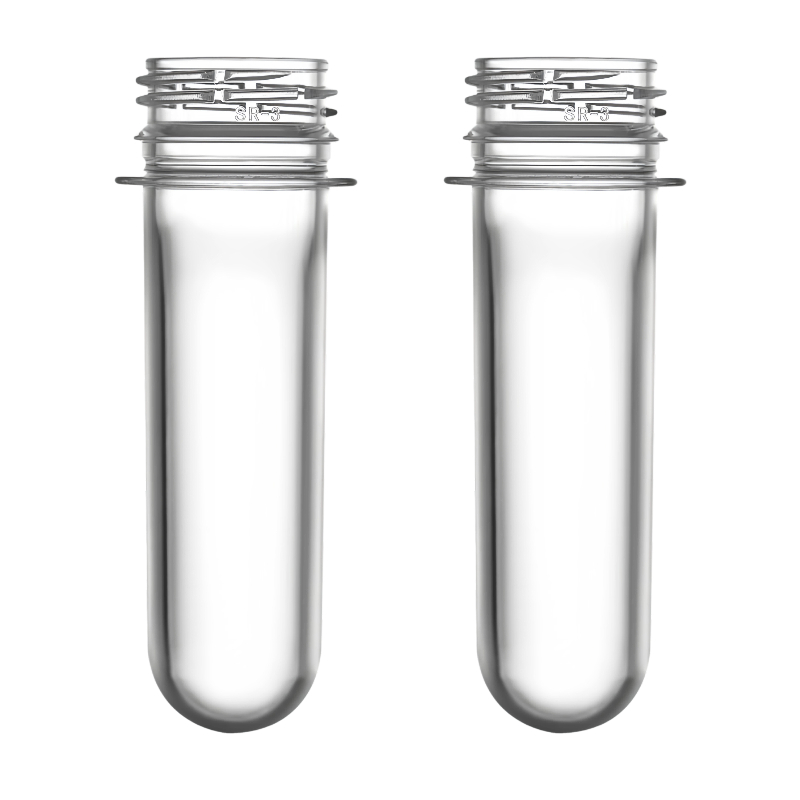
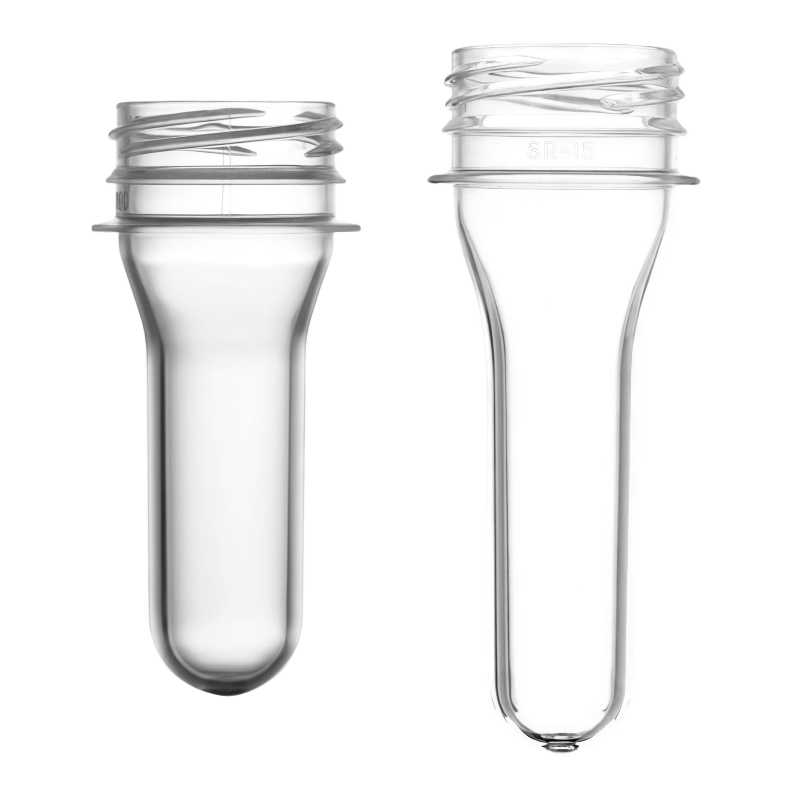
A PET preform that helps to extend shelf life is one that reduces oxygen ingress, preserves carbonation (for CSD), blocks UV/light when needed, and maintains a stable inner surface after stretch-blow molding. In practice, that means using barrier-enhanced PET (passive barrier layers or active oxygen scavenging), correct preform design for uniform wall distribution, and process settings that avoid haze, micro-leaks, or excessive permeation.
If you need a clear, practical rule: choose the barrier mechanism first (passive vs. active), then tune preform design and molding to protect that barrier. The rest of this article breaks down how to do it without overengineering.
How a PET preform controls shelf life
Most packaged product quality loss in PET bottles is driven by gas and light transfer. The preform influences shelf life through what it becomes after stretch-blow molding: wall thickness distribution, polymer orientation, and barrier functionality.
The three “shelf-life leak paths” to manage
- Oxygen transmission (OTR): oxygen entering the bottle can oxidize flavors, vitamins, and sensitive ingredients.
- CO₂ loss (for carbonated drinks): carbonation drop changes taste and mouthfeel; thicker and better-oriented PET slows CO₂ diffusion.
- Light/UV exposure: promotes degradation (e.g., “light-struck” flavors) for some beverages and nutraceuticals.
What “better shelf life” typically looks like
A realistic target is to reduce oxygen ingress by 30–80% (depending on the technology) and/or slow CO₂ loss enough to maintain sensory specs for the intended distribution window. Active oxygen scavenging solutions can extend oxygen-sensitive product stability by weeks to months when paired with good filling practices.
Barrier options: which PET preform technology fits your product
| Preform approach | How it extends shelf life | Best for | Typical tradeoffs |
|---|---|---|---|
| Passive barrier (blends/additives) | Lowers gas permeability by changing polymer structure or adding barrier particles | Moderate O₂/CO₂ control; clear bottles | Material cost; haze risk if not formulated well |
| Active barrier (oxygen scavenger preform) | Consumes oxygen in headspace/wall, reducing oxidation load | Oxygen-sensitive drinks, vitamins, functional beverages | Finite scavenging capacity; needs good storage & process control |
| Multilayer preform (barrier layer in the wall) | Adds a dedicated barrier layer (e.g., high barrier resin) to cut transmission | Longer shelf-life SKUs; premium distribution | More complex tooling/processing; recycling considerations |
| UV/light protection (tints/absorbers) | Reduces photo-degradation and flavor changes | Light-sensitive beverages, dairy alternatives, nutraceuticals | Color shift; brand appearance constraints |
If you must pick quickly: use active oxygen scavenging for oxidation-driven failures (flavor/vitamin loss), and use passive/multilayer barriers for diffusion-driven failures (long distribution windows, carbonation retention).
Preform design choices that make barrier performance real
Barrier resin alone won’t deliver shelf life if the bottle ends up thin in the wrong areas or if the neck/shoulder becomes a high-permeation zone. These preform design choices directly control the final bottle’s permeation profile.
Wall distribution: prioritize shoulder and upper panel
Oxygen and CO₂ move through the entire surface area, but high-stress or thin zones typically dominate. A practical target is to avoid “hot spots” where the final bottle wall drops far below spec; even a small thin area can negate much of the barrier gain. When shelf life is tight, design for uniformity over light-weighting.
Neck finish integrity: micro-leaks beat any polymer barrier
A perfect barrier wall cannot compensate for poor sealing. Use a finish that matches the closure liner system, and keep neck crystallinity and dimensions stable. If you see unexplained shelf-life failures, validate sealing torque and leak rates before changing resins.
Preform weight: the simplest “barrier booster” (within reason)
Increasing average wall thickness reduces permeation. Even modest weight increases can yield noticeable gains, but only if the material is placed where it matters. If you need an immediate improvement without changing materials, consider a controlled preform weight bump aimed at the bottle body panel and shoulder rather than the base.
Processing settings that protect shelf life (and common mistakes)
Stretch-blow molding conditions affect polymer orientation and crystallinity—both change gas transmission. Just as importantly, processing can introduce defects that behave like “fast lanes” for permeation.
Reheat profile: avoid under-stretch and over-thin zones
- Under-heated areas may not stretch enough, leading to uneven walls and lower orientation where you need it.
- Over-heated areas can over-thin, creating high-permeation sections that dominate oxygen ingress.
- For barrier preforms, consistency matters: tighten temperature variability before changing materials.
Moisture and IV control: prevent hydrolysis and performance drift
Poor drying reduces intrinsic viscosity (IV), weakening mechanical properties and potentially increasing permeability through microstructural changes. Track resin/preform moisture, IV, and melt history; shelf-life variation often correlates with these controls.
Active scavenger handling: don’t waste capacity before filling
Oxygen scavengers have finite capacity. Long storage in oxygen-rich environments, excessive heat exposure, or slow inventory turns can consume scavenging potential before the bottle ever reaches the filler. A practical operational rule is: use scavenger preforms on a “fresh-in, fast-out” basis and store them sealed when possible.
Practical selection checklist for a shelf-life-extending PET preform
Use this checklist to match preform features to the actual failure mode. It keeps projects from jumping straight to expensive multilayer solutions when the issue is sealing, fill oxygen, or distribution heat.
- Define the limiting factor: oxidation (O₂), carbonation loss (CO₂), or light sensitivity (UV/visible).
- Quantify current performance: sensory end-of-life date, dissolved oxygen trend, carbonation retention, and leak rate.
- Decide barrier type: passive barrier for diffusion control, active scavenger for oxygen-driven degradation, UV protection for photo-driven defects.
- Confirm preform design: ensure shoulder/body distribution supports the barrier goal and the closure/finish seals reliably.
- Lock processing window: stable reheat and stretch ratios before interpreting shelf-life trial data.
- Run an accelerated validation: warm storage and real distribution simulation to confirm improvement.
When you follow the checklist, the “best” option usually becomes obvious: barrier material for the dominant failure path, plus preform geometry and process controls that keep that barrier intact.
Examples: where shelf-life-extending PET preforms deliver measurable value
Oxygen-sensitive functional beverages
Products containing sensitive flavors, botanical extracts, or vitamins often fail by oxidation first. Switching from standard PET to an oxygen-scavenging preform can significantly reduce oxygen exposure over time, helping maintain taste and active claims longer—especially when combined with low-oxygen filling and minimized headspace oxygen.
Carbonated soft drinks (CO₂ retention focus)
For CSD, the goal is slower CO₂ diffusion. A passive barrier preform (or optimized weight distribution) often provides a practical improvement without changing bottle appearance. If the product is also flavor-sensitive, pairing passive barrier with good closure sealing can yield a larger gain than barrier alone.
Light-sensitive beverages
When light triggers defects, preforms using UV absorbers or controlled tinting protect the product without requiring opaque packaging. The key is balancing protection with brand requirements: use the minimum optical change that meets stability targets.
Conclusion: what to specify when you want a PET preform that helps extend shelf life
To reliably extend shelf life, specify a PET preform by performance outcome rather than marketing labels: target oxygen ingress or CO₂ loss limits, choose the barrier mechanism (passive, active scavenger, multilayer, UV protection), and confirm the preform design and process window prevent thin spots and seal leakage.
The most dependable approach is: match the preform technology to the dominant degradation path, then validate with distribution-relevant testing. That is what turns a “barrier preform” into a PET preform that helps to extend shelf life in real-world supply chains.